Get Full Government Meeting Transcripts, Videos, & Alerts Forever!
Get email alerts on the Wildfire Mitigation topic
No spam. Unsubscribe anytime.
West Region Wildfire Council touts homeowners program and expansion of mitigation work in San Miguel County
Summary
The West Region Wildfire Council said it completed 62 of 77 homeowner site-visit requests in San Miguel County in 2025, treated about 247.2 acres through 19 vegetation-management projects, and secured additional funding for low-income visits and watershed fuels reduction.
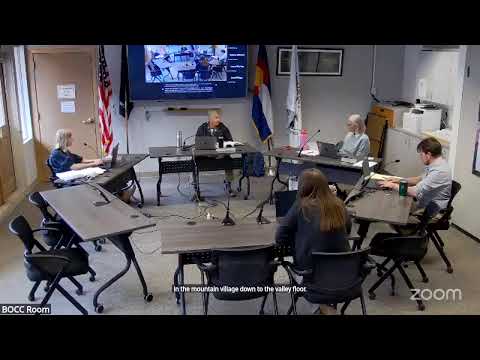
Tim Panau, chief executive of the West Region Wildfire Council, and Scott Moral, the council’s chief operating officer, briefed the San Miguel County Board of Commissioners on the council’s 2025 work and 2026 priorities on Feb. 25.
Panau and Moral highlighted homeowner-focused programs that aim to reduce structure loss during wildfire. They reported 77 requests for homeowner site visits in the county in 2025 and completion of 62 visits; the council said it treated about 247.2 acres across 19 vegetation‑management projects and spent roughly $119,000–$120,000 on those projects in the county, with landowner cash match about $125,000 and in‑kind contributions near $30,000.
The council emphasized its Wildfire‑Ready Home certification enrollment — the county leads the council’s six counties in the number of homes enrolled — and described a new Telluride Foundation grant that will expand low‑income site visits in 2026 (25 visits earmarked for households below area median income), bringing the total free visits available in the county to 75 next season.
Moral described the vegetation‑management work as largely contractor‑driven with forester oversight: the council helps landowners apply, manages contracting and reimburses a cost share. The group said it also runs a contractor marketplace and trains assessors and is coordinating multi‑jurisdictional grants including a Greater San Miguel watershed grant and funds to work near Ski Ranches and the Skunk Creek area — projects the council said will require Forest Service coordination on NEPA and archaeological surveys.
Commissioners and council staff discussed insurance incentives tied to wildfire‑ready certifications and the uneven insurance market; the presenters said Colorado’s statute requires insurers to consider certificates but does not mandate discounts and that the program’s statewide roll‑out is ongoing.
Ending: Commissioners thanked the council for its work and for targeting mitigation in cluster neighborhoods; the council pledged to continue outreach and to pursue collaborative projects that can reduce the need for future emergency declarations.