Get Full Government Meeting Transcripts, Videos, & Alerts Forever!
Get email alerts on the Emergency Management topic
No spam. Unsubscribe anytime.
County emergency plan reviewed; staff urged to track costs and roles
Summary
San Miguel County emergency operations manager Shannon Armstrong told commissioners the Emergency Operations Plan is a governance framework (not an SOP), explained NIMS/ICS adoption, EOC roles and the documentation needed to pursue state and federal reimbursements after disasters.
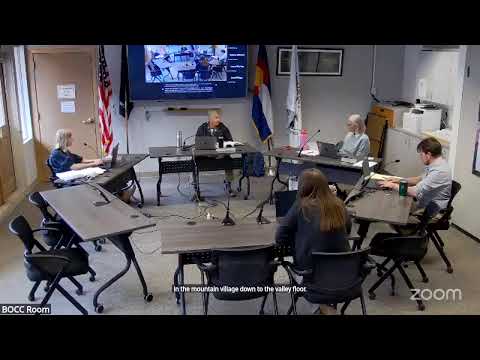
Shannon Armstrong, the county’s emergency operations manager, gave commissioners a 45-minute overview of San Miguel County’s Emergency Operations Plan on Feb. 25, saying the document is a high-level governance framework for coordinating disaster response rather than a step-by-step operations manual.
The plan, Armstrong said, codifies the county’s use of the National Incident Management System and Incident Command System, explains when the Emergency Operations Center will activate, and defines the county’s Emergency Support Functions (ESFs) — the people and teams responsible for stabilizing critical lifelines such as safety, shelter, health, energy, communications, transportation and water systems.
“The EOP is about who does what,” Armstrong said, advising commissioners to review the roles and responsibilities she updated during the most recent revision so elected leaders understand what the policy group may be asked to authorize during an incident. She said local incident command typically starts and ends locally but that incidents scale up and may require executive-level decisions such as emergency declarations or intergovernmental coordination.
Armstrong walked the board through the finance and documentation implications of declaring a local disaster. She said local declarations unlock emergency procurement rules, allow the county to request state-level assistance (and, if conditions warrant, a federal declaration), and are required to access mutual aid such as EMAC and some federal programs. She warned that federal public‑assistance reimbursements are reimbursements — the county must front costs — and that FEMA reimbursement requires detailed, contemporaneous documentation of hours, equipment, contracts and damage assessments.
On FEMA public assistance she said Colorado’s per‑capita impact indicator is used to screen requests for federal assistance and urged the county to prioritize rapid damage assessments and careful paperwork to preserve eligibility. Armstrong also recommended operationalizing the document by producing job aids and checklists so staff and commissioners can quickly find and use the portions of the plan most relevant to their duties.
Next steps: Armstrong said she has posted the latest plan to the county file share, is working to publish a user‑friendly version on the county website, and plans to develop job aids and checklists for staff and elected officials to “flip to what they need” during an incident. The board did not take formal action but asked staff to bring any suggested clarifications forward.
Ending: The presentation closed with commissioners thanking Armstrong for the update and asking staff to continue work on accessible job aids and posting the plan to the website.