Get Full Government Meeting Transcripts, Videos, & Alerts Forever!
Get email alerts on the Social Media Policy topic
No spam. Unsubscribe anytime.
Sen. Schatz presses witness on research, urges ban on algorithmic feeds for minors
Summary
At a Senate hearing Sen. Schatz said many parents are 'powerless' against platform algorithms and urged federal limits — including banning algorithmic feeds for children and 'bell-to-bell' school restrictions — while Dr. Radesky said much research is internal to platforms and described emotional amplification from engagement-based feeds.
Sen. Schatz pressed a witness at a Senate hearing to identify the research linking engagement-maximizing algorithmic feeds to harms for children and argued that federal action is needed because most parents are "powerless against these algorithms." He said empowering parents without legal limits risks benefiting only the most resourced families and called for a law to address population-level harms.
"Empowering parents and blaming parents are two sides of the same coin," Sen. Schatz said, and added that "the rest of us just need a law." He said the bill cosponsored by the chairman — which he referenced by the acronym "KOSA" — is stronger on the point he finds most important: banning algorithmic ranking for underage users.
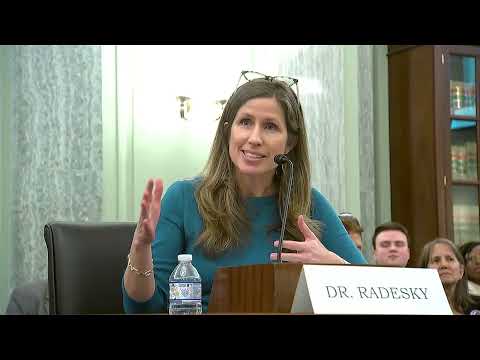
Dr. Radesky, who testified on the evidence base, told the panel that much of the relevant research is not publicly available to outside researchers and that platforms have conducted internal studies. She cited a convening published by Cunningham last year that pooled academics and platform researchers to evaluate feed designs and said engagement-based ranking "leads to more time online" and "more amplification of emotions."
"Users can experience much more intense anger, happiness, and stress," Dr. Radesky said, and she noted that teenage brains are particularly sensitive to emotional arousal, which can contribute to more compulsive use.
Sen. Schatz pressed a practical policy question about schools, proposing a "bell-to-bell" restriction that would bar social media use during school hours. He acknowledged there are rare situations where access is necessary but said a clear, population-wide rule could be more effective than a patchwork of limited allowances.
A witness voiced support for the bell-to-bell approach while noting that other distractions — streaming video and texting — would likely persist even if algorithmic feeds were curtailed. "The devices are distracting. Social media is one of the reasons," the witness said, emphasizing the difference between device distractions broadly and engagement-focused feeds that amplify emotional arousal.
The exchange in the transcript focused on evidence availability and the merits of banning algorithmic feeds for minors; the excerpt does not record a vote or formal committee decision.