Get Full Government Meeting Transcripts, Videos, & Alerts Forever!
Get email alerts on the Tree Protection Landscaping topic
No spam. Unsubscribe anytime.
Palm Coast staff propose tighter tree-protection, landscaping and irrigation rules
Summary
City staff presented a package of clarifications and policy updates to Chapter 11 of the Land Development Code to strengthen protections for specimen and historic trees, standardize measurements, limit certain nonnative pines in credits, require smart irrigation and mulching standards, and expand permitted uses of the tree bank fund for arboricultural treatments; the board provided feedback and the item goes to City Council May 12.
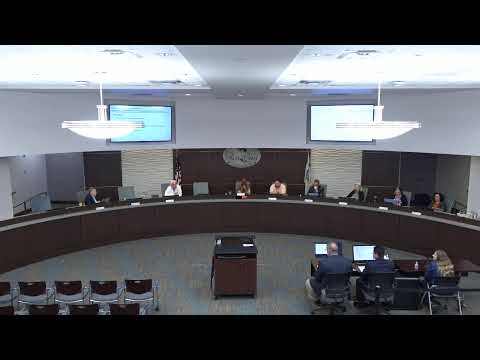
City of Palm Coast planning staff presented a set of proposed amendments to Chapter 11 of the Land Development Code at a March 4 workshop, outlining measures intended to preserve the city’s tree canopy and reduce developer confusion about tree-protection requirements.
“Development shall be designed to the greatest extent possible to protect existing trees and their tree protection zones,” Rick Picatagi, the city’s landscape architect, told the board as he introduced the draft changes, which staff described as mostly clarifying language drawn from the adopted comprehensive plan and prior practice.
The package includes several substantive clarifications and standards: it defines tree measurement as diameter at breast height (DBH) measured 4 feet 6 inches above ground and specifies how to calculate DBH for multi‑trunk trees; it adjusts protected‑tree thresholds for single‑family and duplex lots (staff proposed treating trees 1.5 inches or greater that were planted to meet minimum density or previously credited as qualifying for protection); and it requires subdivision plats to individually locate and identify specimen and historic trees by species and size.
Staff also revised preservation accounting. Table 11‑1 would require specimen and historic trees to be preserved and calculated as separate categories rather than counted cumulatively, and tables for mitigation and replacement (tables 11‑2 and 11‑4) were clarified so property owners know what constitutes mitigation on multifamily, commercial and single‑family projects. When on‑site replacement is impracticable, property owners would be allowed to pay into a city tree bank fund.
Carol Minnie, the city’s urban forester, said the proposed tree bank fund language explicitly allows contributions to be used for arboricultural practices such as root‑collar excavation, irrigation, mulching and specialized equipment rental to protect large or declining heritage trees. “There are practices that can cost thousands of dollars that the city could not otherwise cover,” she said, describing preservation work that can extend the life of important trees.
The draft would also limit how nonnative pine species are used for buffer credits: healthy pines that are not invasive may count toward buffer shade‑tree credits but typically no more than half the requirement, and staff proposed reducing the extent to which certain pines can satisfy tree credits in some contexts from previously higher allowances to 25 percent in others. Staff singled out Australian pine, Norfolk Island pine and Brazilian pepper as species they do not want credited because of invasiveness, structural risk or susceptibility to cold damage.
Other operational changes would require clearing and grading plans to show vegetation preserved with visible protective barriers (distinct from silt fences), require irrigation systems to include moisture sensors or smart controllers, set mulching depth at 3–4 inches, and mandate signed and sealed as‑built landscape and irrigation drawings before certificates of occupancy in most zoning districts. Pruning of branches 1 inch or larger at 8 feet or higher would need to be performed or supervised by an arborist certified by the International Society of Arboriculture when required by the code.
Picatagi said the proposed amendments aim to reduce developer uncertainty and give staff clearer tools — for example, by allowing lot lines to be shifted during platting to keep specimen trees out of buildable areas and by empowering the land‑use administrator to make feasibility determinations where constraints such as high water tables affect tree preservation.
No members of the public spoke during the workshop. Board members asked procedural and implementation questions, suggested outreach such as Arbor Day education to discourage homeowners from planting invasive species, and discussed practical details such as setbacks for screening plantings near electrical equipment; staff said they would consider small edits (for example, keeping a 3‑foot setback for mechanical equipment) before presenting a final draft.
The board took no formal vote on the amendments at the workshop. Staff said the item is scheduled for City Council review on May 12; the board will see additional land‑development chapters (signs, digital signs and zoning/dimensional standards) in coming months.