Get Full Government Meeting Transcripts, Videos, & Alerts Forever!
Get email alerts on the Moose Outfitter Permits topic
No spam. Unsubscribe anytime.
Committee adopts department-backed amendment tightening moose outfitter rules after lengthy debate
Summary
A legislative committee voted 10–1 to adopt a department-drafted amendment to LD 2054 that tightens eligibility and transfer rules for moose-hunting lodge permits and authorizes lottery changes aimed at reducing permit swaps; stakeholders split over sales, swap limits and a proposed three-year eligibility criterion.
A legislative committee voted 10–1 to adopt a department-backed amendment to LD 2054, a bill aimed at clarifying how moose-hunting lodge permits are allocated and used.
The amendment, presented by the Maine Department of Inland Fisheries and Wildlife, adds specific eligibility criteria for outfitters, limits certain sales and swaps of lodge permits, caps the share of lodge-issued permits to 5% of district-season allocations, and authorizes the department to change the lottery algorithm so applicants can indicate preferences by season and wildlife management district.
Why it matters: supporters said the changes are intended to protect the integrity of the lottery and preserve hunting access for non-residents and independent guides; opponents said the measure includes substantive policy shifts that should have had fuller analysis and public airing before committee action.
“We're asking for an affidavit indicating that applicants meet the standards,” Tim P., deputy commissioner of the Department of Inland Fisheries and Wildlife, told the committee, describing the department’s criteria for eligibility. He said the criteria include operating as a guide service, supporting documentation such as licensing or historical records, and — in one of the department’s standards — evidence of guided moose hunts in three of the last five calendar years.
Members pushed the department to clarify how the three-of-five-years criterion would affect new businesses and new lodge locations. Representative Kochi and others asked whether a purchaser who acquires an existing lodge would have to wait years to enter the lottery; the department said licensing questions (DHS licensing) and the committee could refine that detail.
Two of the most disputed provisions were limits on transfers and swaps and a reduction in the lodge-permit cap. The amendment would bar outfitters from selling a lodge permit to another outfitter (sales between outfitters) and would restrict swapping a lodge permit with permits from the general moose lottery except in narrowly defined relocation cases. The department said that language follows earlier guidance and is intended to prevent transfer practices that bypass the lottery process. Lodge owners and some guides said those rules could harm longstanding business practices.
“My concern is the swapping language and the sale restrictions,” Wade Kelly, a lodge owner, told the committee. He said the changes would undermine customary trades and cooperative arrangements that sometimes help lodges and guides manage hunts when operators are unavailable.
James Cody, representing the Main Professional Guides Association, said his organization supports the amendment as a way to "clean the program up" and protect the lottery’s integrity, though he acknowledged not all lodge owners agree on every provision. Jason House, vice president of the Maine Sporting Camps Association and a lodge owner, said he personally expects a financial hit in his zone but supports the changes as a fairness measure.
Procedural concerns surfaced repeatedly. Several members, including the bill’s chair, said the amendment arrived as a multi-page, substantive package during a work session and asked that the legislative analyst review it before finalization. The chair initially signaled reluctance to advance major substantive language without analysis but allowed time-limited stakeholder testimony and a caucus before the committee voted.
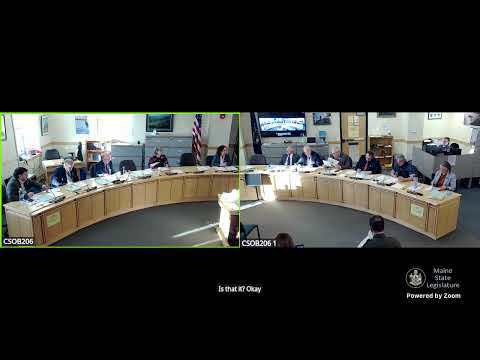
The vote and next steps: after discussion and brief public testimony, a member moved to adopt the department’s presented language as the committee amendment; the motion was seconded and passed on a roll call, 10 in favor and 1 opposed. The dissenting member filed a minority report. The committee then sent the adopted language to the legislative revisor for language review and set a 48-hour window for members to submit any final language issues.
What remains unresolved: members asked for clearer statutory definitions (for example, what constitutes a ‘‘swap’’ versus a compensated transfer), what the affidavit would require, and how the three-year eligibility rule should treat ownership changes and new business entities. The department said it can modify lottery algorithms to reflect applicant preferences, which officials argued should reduce the need for manual swaps.
The committee adjourned the LD 2054 work session after advancing the amendment and scheduling language review.