Get Full Government Meeting Transcripts, Videos, & Alerts Forever!
Get email alerts on the Mental Health topic
No spam. Unsubscribe anytime.
Youth presenters at Cape Coral meeting share Oasis High survey showing mixed school support for student mental health
Summary
A Youth Council presentation of 214 Oasis High School survey responses found split views on school mental-health support, examples of stigma and requests for expanded resources; school leaders and city officials pledged follow-up outreach and awareness projects.
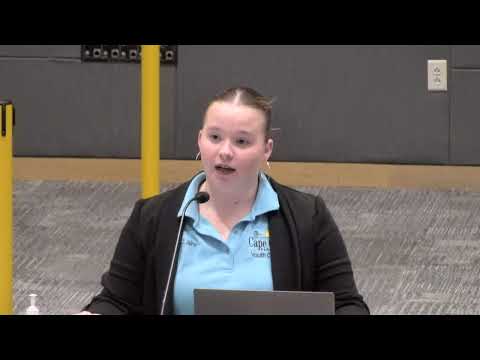
Claire Johnson, who identified herself as head of the Youth Council’s Mental Health Project, told the joint meeting of the Cape Coral City Council and Youth Council that her team gathered 214 responses at Oasis High School over three weeks and asked students about need for support, school services and barriers to seeking help. The students’ answers were mixed: 43 of 214 said they needed mental‑health support at school, while 110 said their school did not provide enough support and 104 said it did.
Johnson read students’ open‑ended responses describing missed school days because of anxiety or depression, reluctance to seek help for fear of stigma, and complaints that guidance counselors are too busy or that there is no quiet, confidential space on campus. "Sometimes it is just hard to get up in the morning and go into a place where I feel like no one understands me," one student wrote, a quote Johnson included as representative feedback.
Oasis Charter Schools Superintendent Jackie Collins told the council that schools must provide annual funding and training: every employee who engages with students receives youth mental‑health first aid training, the school provides five hours per year of social‑emotional learning, and Oasis offers a QR code students can use to book an anonymous appointment with a social worker. Collins said those measures are intended to lower barriers to help‑seeking but acknowledged access and awareness vary across campuses.
Council members pressed for wider data beyond Oasis. Councilmember Stankey asked why county schools were denied participation; presenters and council staff said they had contacted Lee County and expected follow‑up. Councilmembers proposed concrete next steps, including inviting county and school officials to a Youth Council panel, assembling a simple trifold resource guide with QR codes for every school, and having students lead an awareness campaign aimed at peers.
The presenters urged the Youth Council and city staff to collaborate on outreach projects that would publicize anonymous access options and boost students’ knowledge of services. The Youth Council said it would return with additional data if permissions from Lee County are secured and recommended the city support panels and awareness events to reduce stigma and improve connections between students and school or community providers.
The meeting ended with officials thanking the student presenters and agreeing to pursue follow‑up outreach and data collection to measure whether services and awareness increase over time.