Get Full Government Meeting Transcripts, Videos, & Alerts Forever!
Get email alerts on the Budget topic
No spam. Unsubscribe anytime.
City briefing: Community & Economic Development warns permitting reserve could hit zero; staff propose program trade‑offs
Summary
Deputy City Administrator Donnie Oliveira told councilors that constrained development revenues and smaller permit valuations have produced a roughly $6.2 million permitting cost‑recovery gap and drawn the permitting reserve down to about $11–13 million, risking exhaustion within 12–18 months absent action; staff outlined options including fee increases, staff reductions and one‑time transfers.
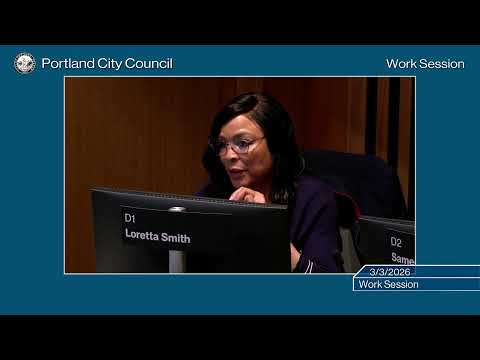
Deputy City Administrator Donnie Oliveira told the Portland City Council on March 3 that the Community & Economic Development service area faces hard trade‑offs as the city builds next year’s budget.
Oliveira said the development cycle has not rebounded to pre‑pandemic valuation levels and that many permitting fees — which provide roughly 98% of the permitting-development bureau’s revenue — are not meeting cost recovery. "Right now with declining revenues, our cost recovery is not meeting the need for the staffing operations to the tune of about $6.2 million," Oliveira said. He added the city has been drawing on a permitting reserve that has fallen from historical peaks and could be depleted within the next year to 18 months without increased development, fee changes or other revenue.
The presentation outlined how the service area spends its dollars across multiple funds and programs. Oliveira and Finance Manager Megan Cummings highlighted that more than 70% of the service‑area budget goes directly to community recipients via grants, loans and contracts — examples included Portland Clean Energy Fund investments (cited at about $53 million in recent years), the Children’s Levy (about $27 million), arts and culture grants and Prosper Portland economic development expenditures. "Much of the work that this service area takes on takes place over decades, and not necessarily days or months," Oliveira said.
Councilors pressed staff on several specific items: the composition of the beginning fund balance (staff confirmed that PCEF and some pass‑throughs dominate the balance), details about a $2.1 million ongoing appropriation to Prosper Portland that had been replaced with one‑time funding last year, and the structure of permit metrics used to measure outcomes versus outputs. Budget Director Ruth Levine said the adopted budget book includes prior‑year data and staff agreed to follow up with more granular reporting and dashboards.
Oliveira and others described options for closing gaps if revenues do not recover: increasing fees, further FTE reductions, drawing on reserves or seeking one‑time allocations. "I'll just note that on top of the 170 positions that we've seen reduced, the next range of cuts are starting to cut into core programs that we would say we can't do the permit reviews," Oliveira said, arguing the service area is at a point where further staffing cuts would materially affect core operations.
Several councilors asked for clearer breakdowns of PCEF staffing (55 FTE was cited), the role and metrics for Prosper Portland programs, and the status of pilot programs (for example, a shared‑housing pilot newly launched). Staff committed to providing follow‑up itemized figures, clarifying which expenditures are ongoing versus one‑time, and delivering more detailed permit‑type valuation data.
Next steps: staff said they will return with briefings that break out fund balances, reserves and program deliverables and will provide materials the council requested on carryover, reporting dashboards and possible fee adjustments. The work session then moved to the Public Safety service area.