Get Full Government Meeting Transcripts, Videos, & Alerts Forever!
Get email alerts on the District Vision topic
No spam. Unsubscribe anytime.
Teton County District unveils 'We Are Teton' vision; parents press for four‑day‑week benchmarks
Summary
At a community forum the Teton County District presenter outlined a three-step plan—systems building, vision, implementation—centered on a 'We Are Teton' campaign. Parents asked when promised benchmarks for the district’s four‑day week and a public dashboard would be available.
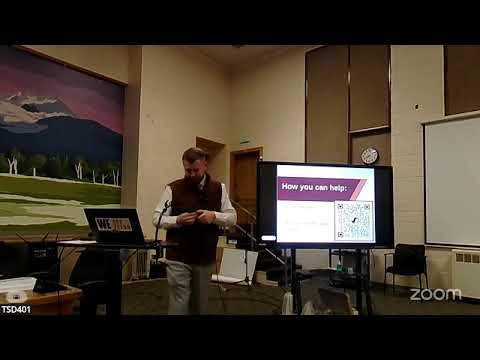
A presenter for the Teton County District laid out a multi‑year vision at a community forum, saying the district is moving from diagnosing "current realities" to building systems designed to make improvements last beyond any one leader.
The presenter described three steps—build systems, create a vision and implement it—and introduced "key initiatives" the board will track with a green/orange/red rubric. He framed the We Are Teton campaign as part of that work, saying its aims include consistent messaging, building pride, and increasing inclusion. "It means all of us," he said, recounting a kindergarten student’s answer to what "we" means, and saying that sense of belonging guides the campaign.
Why it matters: The presentation ties the district’s daily operations and initiatives (instructional rigor, communications, and staff collaboration) to a unified identity campaign. Parents at the forum pressed for measurable evidence that initiatives such as the four‑day week are delivering promised benefits.
During the question-and-answer period, a resident identified as Cathy asked when benchmarks for evaluating the four‑day week would be released. The presenter said the district triangulates data—classroom formative assessments, state ISAT scores and cohort growth measures—and that the seven initiatives under the plan will produce outcomes the board can hold staff accountable to by the end of the school year. "We triangulate our data," he said, and added that the so‑called 'fifth day' of the four‑day week is being used for collaborative planning and professional work tied to those initiatives.
Parents also requested simpler, more accessible summaries. One attendee suggested a concise annual dashboard showing attendance, enrollment, staff retention, graduation rates and other immediate metrics. The presenter agreed and said the district is building dashboards for both staff and the public that will present academic and financial indicators and make it easier to see progress against the initiatives.
On communications, the presenter thanked Sarah, identified in the forum as the district’s communications director, for improving newsletters and social media outreach; he said the district will continue developing ways for parents to find concise, centralized information about programs such as CAM (a math intervention) and the 21st‑century online‑learning modules.
Participants raised other concerns—budget uncertainty tied to state actions, enforcement of a no‑phone policy and clarity on which students should take online courses. In response, the presenter said the admin team runs 1%–2% contingency scenarios and will use collaborative teams to protect core services where possible; he described phone collection and accountability as part of enforcement and said high school students present the largest compliance challenge; Ms. Queen (named during the session) described an online‑learning course that prepares middle‑school students for future remote coursework and tracks suitability for students on IEPs.
The forum ended with a request that attendees complete a brief survey so the district can incorporate community feedback into ongoing work. The presenter reiterated the district’s intent to make progress verifiable, to publish clearer dashboards and to return with data and updates.
What’s next: The district plans to compile and publish dashboard indicators tied to its seven key initiatives; the presenter said benchmarks connected to those initiatives will be available by the end of the current school year. The district invited further community feedback and follow‑up conversations.