Get Full Government Meeting Transcripts, Videos, & Alerts Forever!
Get email alerts on the Telecom Infrastructure topic
No spam. Unsubscribe anytime.
Grant County BZA approves 199-foot Southern Towers site with navigational-lighting condition
Summary
After testimony from the applicant and an appraiser and public opposition, the board approved a special exception for a 199-foot cell tower proposed by Southern Towers with Verizon as tenant, adding a condition requiring navigational lights to enhance visibility.
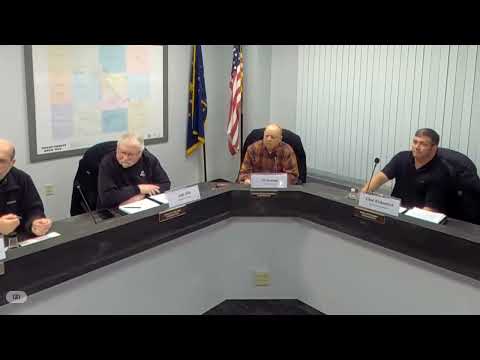
The Grant County Board of Zoning Appeals approved a special exception for a 199-foot wireless tower proposed by Southern Towers, imposing a condition that navigational lights be installed on the tower’s top (and a mid-level) for aviation and visibility safety.
Russell Brown, attorney for Southern Towers, presented the application and said the site was chosen to meet coverage and capacity needs along the I-69 corridor between an interstate exit and nearby towns, to maximize separation from residences and to use existing farm buildings as partial visual shielding. The petition described a 100-by-100-foot lease compound on a roughly 77-acre parcel, no guy wires, a fall radius of about 90 feet and design capacity to accept multiple collocators, with Verizon identified as a confirmed tenant.
Mark Riderman, a licensed appraiser retained by the applicant, told the board he had not found consistent market evidence that towers at the observed distances (several hundred feet from nearby homes) produce measurable reductions in property values; he said isolating such impacts in housing markets is difficult because many variables affect value.
Neighbors raised objections at the hearing. Virgil Kadel, a nearby landowner, said the tower location is too close to residences and proposed an alternate placement on the same parcel that he said would be farther from homes; he also voiced concerns about noise, lightning strikes and health effects. Applicant counsel replied that moving the site would shift impacts to different neighbors, that RF-health questions are federally regulated and not appropriate grounds for local denial, and that the proposed location was chosen to reduce intrusiveness while meeting RF objectives.
Board members discussed the evidentiary difficulty of proving property-value impacts and whether the new location meaningfully reduced visual intrusion. Members also expressed safety concerns for aircraft and crop-duster operations and asked whether the local ordinance allowed the board to add conditions. The board moved to approve the special exception with the navigational-lighting requirement; roll-call was unanimous in favor.