Get Full Government Meeting Transcripts, Videos, & Alerts Forever!
Get email alerts on the Parking Ordinance topic
No spam. Unsubscribe anytime.
Haslet council unanimously rejects proposed parking ordinance after hours of public opposition
Summary
After a full public hearing in which dozens of residents said proposed changes to Chapter 12 would impose HOA‑style restrictions on long‑standing, large‑lot neighborhoods and risk residents’ livelihoods, the Haslet City Council voted unanimously to deny the ordinance and sent staff back to revise the draft with lot‑size exemptions and clearer grandfathering.
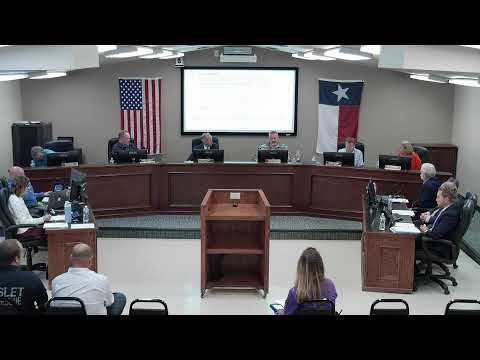
Haslet — The Haslet City Council voted unanimously on March 2 to deny a staff‑draft ordinance that would have amended Chapter 12 of the city code to tighten rules on parking and the storage of trailers, RVs and certain commercial vehicles on residential properties.
The denial followed a nearly three‑hour public hearing in which dozens of residents — many who live on 1‑acre or larger lots in neighborhoods such as Brentwood, Hasslet Park and Oldtown — urged the council to reject the proposal and to instead pursue narrower, targeted measures. Residents said the draft resembled HOA restrictions and would unfairly penalize long‑time homeowners who use trailers or work vehicles for their livelihoods.
"We did not move here for city rules that feel like an HOA," said Daryl Shelton, a Brentwood resident who described decades of investment in his property and warned that stricter enforcement would impose disproportionate costs on older residents. Several residents who work in construction or run small businesses said on‑site trailers and utility vehicles are essential to their income.
Code enforcement presented the ordinance as a safety‑and‑access measure. "The proposed amendments are designed to modernize and clarify the city’s traffic and parking regulations," said Pamel Smith of Code Enforcement, summarizing provisions that include parallel‑parking standards, distance from intersections and new screening/fence requirements for oversized vehicles.
But speakers and several council members said the draft lacked necessary tailoring. Residents pointed to legal and property‑rights concerns raised in written comments; urged that any new rules exclude lots above a certain size; and asked for clear grandfathering language so existing homeowners would not be forced to remove longstanding property features when they sell or make modest upgrades.
In council discussion after the hearing, members pressed staff on how anonymous complaints were logged and whether permits or continuance provisions would survive a change of ownership. City staff said the draft currently provides limited grandfathering and that some complaints prompting review were anonymous, but also said most investigated complaints led to documented violations.
A councilmember made a motion to disapprove the ordinance as written; after debate the motion was seconded and carried unanimously. Council directed staff to return with revised language that could include lot‑size exemptions (several members suggested an acre as a threshold), a clearer continuance/grandfathering approach, and redlined text for public review.
The council’s action does not ban staff from preparing a new draft; it instructs staff to involve stakeholders and to present the revised ordinance and a redline for council consideration at a future meeting.
The council also voted later in the meeting to approve several unrelated items, including interlocal emergency‑services agreements and a budget amendment to fund the city administrator position, actions reported separately.