Get Full Government Meeting Transcripts, Videos, & Alerts Forever!
Get email alerts on the Special Education topic
No spam. Unsubscribe anytime.
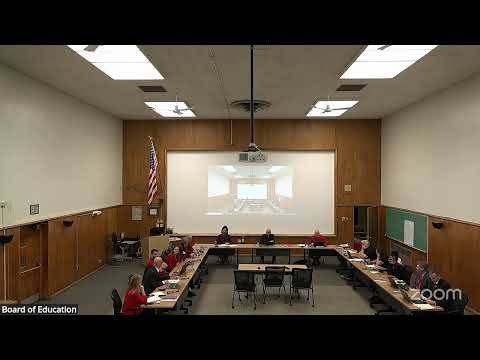
North Syracuse board hears special education push as classification rates rise
Summary
District special education directors told the board that incoming students show higher acuity, the district is about 40% toward its parent-survey target, and roughly 90–100 new IEP entries were recorded last year, with about 20% requiring more-restrictive placements; directors said capacity and staff support are concerns as they prepare budget recommendations.
Special education directors told the North Syracuse Central School District Board of Education that they are tracking rising needs among incoming students and are preparing budget and program recommendations to respond.
"We are currently 40% complete toward our target goal of completed surveys," said Julie Dary, one of the district’s special education directors, referring to a state parent-involvement survey the district is administering. Dary and two colleague directors outlined four priorities for the department: the state performance plan and parent-survey work, professional learning for staff, continuum planning to match placements to needs, and an analysis of classification rates over recent years.
The presenters said intake trends have been notable. District staff reported that over the prior school year the district recorded roughly 90–100 new students with Individualized Education Programs (IEPs), and about 20% of those new entrants required more restrictive, special-class placements. Directors said those figures are driving referrals to BOCES programs and shaping recommendations for the next budget cycle.
The presentation described program-level differences that affect placement decisions. Julie Dary and colleagues explained that some center-based programs (described in the presentation as “R‑613” profiles) serve students with Level 3 autism and intensive adaptive needs, including feeding and toileting supports; those placements can offer smaller staffing ratios and wraparound services that are not always available in standard 8:1:1 or 12:1:3 classroom configurations. District staff said BOCES (referred to in the presentation) can provide more intensive therapeutic approaches and center-based supports for students whose needs exceed what the district can safely program in-district.
Board members raised concerns about staff burnout and the difficulties of sustaining specialized supports in general education settings as student acuity increases. District staff said they are analyzing data gathered during listening sessions and annual reviews to inform continuum planning and professional development, and they expect to fold those analyses into budget recommendations.
District directors described practical next steps: completing the parent-survey work during annual review meetings across buildings, continuing in-house professional learning to support IEP implementation, and producing budget guidance that reflects projected student needs and required staffing. The board did not take formal action on the presentation; directors said further analysis will inform recommended budget priorities in the coming months.