Get Full Government Meeting Transcripts, Videos, & Alerts Forever!
Get email alerts on the Parking Policy topic
No spam. Unsubscribe anytime.
Planning board considers flipping commercial parking minimums to maximums to reduce pavement
Summary
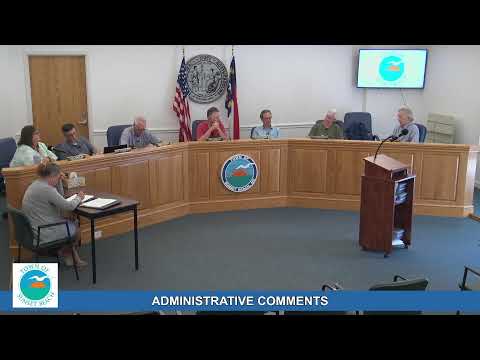
On May 15 the Town of Sunset Beach Planning Board discussed replacing commercial parking minimums with maxima to discourage over‑paving, encourage shared parking and support walkable commercial districts; members urged preserving minimal accessibility requirements and tailoring changes by district.
The Town of Sunset Beach Planning Board spent substantial time on May 15 debating whether to convert nonresidential parking minimums into parking maxima for commercial properties and how to do so without harming accessibility, tourism traffic or residential development.
Proponents said switching minimums to maxima would reduce unnecessary asphalt, create opportunities for landscaping, sidewalks and shared parking, and better support walkable commercial development in the town’s overlay (the ‘‘mud’’ district). Several members favored keeping a modest allowance above any cap (examples discussed ranged from 5% to 20%) and retaining a small accessibility floor to satisfy federal handicap‑parking thresholds.
Opponents cautioned against removing residential parking minimums (residential developers tend to build to the minimum), stressed that federal disabled‑parking requirements remain binding (the number of ADA spaces depends on the total spaces provided), and warned that Sunset Beach’s seasonal tourist demand means maxima should not be set so low that they prevent practical access for visitors.
Implementation ideas the board discussed included allowing shared‑parking agreements and overflow arrangements for peak uses, targeting reduced minimums to specific districts (for example, no minimums in the mud/overlay district while maintaining different rules elsewhere), and offsetting reduced parking with required public improvements (more trees, wider sidewalks, storm‑water measures) in exchange for fewer on‑site spaces.
The board gave conceptual direction to staff to draft options and impact calculations that reflect district targeting, the town’s 20% allowance provision, and federal accessibility requirements. Staff will return with draft code language and examples for further review.