Get Full Government Meeting Transcripts, Videos, & Alerts Forever!
Get email alerts on the Land Use topic
No spam. Unsubscribe anytime.
Commissioner outlines how Rappahannock enforces land‑use tax breaks and how roll‑backs work
Summary
Commissioner of Revenue Mary Graham told the Board of Supervisors how revalidation and use‑value processes work, described enforcement steps (aerial review, requests for farm income and forestry plan checks) and said legacy office errors are not assessed roll‑back taxes; she urged citizens to bring specific complaints for follow‑up.
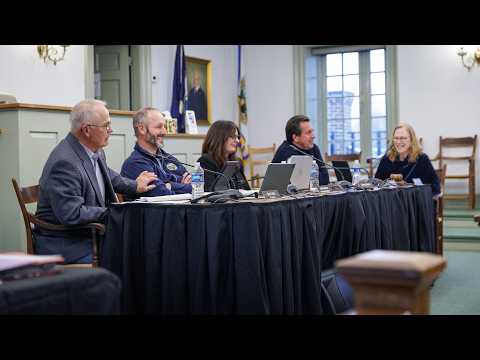
Mary Graham, Rappahannock County’s commissioner of revenue, on March 2 presented a detailed review of the county’s land‑use taxation program, how use values are set and the office’s enforcement approach.
Graham told the board that revalidation and application fees are set in county ordinance and are currently $60, and that the next six‑year revalidation period will fall in the autumn of 2027. She said use values are set during a general reassessment and that changing them outside of a reassessment would amount to a spot assessment, which is not permitted under the interpretation she described.
“The revalidation fee covered about half the cost of reassessment,” Graham said, and added that timing between revalidation and reassessment helps spread costs.
On enforcement, Graham described a routine, layered approach: review of submitted documentation, targeted aerial and plat comparisons, requests for proof of farm income or receipts from livestock sales, forestry management‑plan checks and third‑party reviews where necessary. When records suggest a parcel’s acreage or productive use was overstated in legacy files, Graham said staff will contact owners, request soil tests or updated harvest reports, and, when appropriate, pursue roll‑back tax assessments.
“If it’s an error that was my office’s mistake…I do not charge a roll back tax in that situation,” Graham said, describing a process in which the office distinguishes legacy record errors from cases where property owners have not maintained qualifying activities.
She also described the department’s ‘‘workout’’ option for older owners who want to exit the program without immediate penalties: owners may request to pay full taxes for five years while they continue farming; after five years of paying full taxes they may be released from land‑use status without a retroactive roll‑back assessment.
Board members pressed for more detail about the data the commissioner uses. Graham said her office planned to recruit citizen volunteers to help collect market data—prices per acre, current hay and cattle pricing—so the county can refine use‑value inputs ahead of the next reassessment. She said some neighboring counties appear to have more complete reporting, which can drive value differences.
Graham asked supervisors to direct constituents with concerns to bring specifics: parcel IDs, dates and the nature of the suspected failure to qualify. “I need specifics,” she said. “We can’t follow up on vague complaints.”
What happens next: Graham will continue to prepare data and outreach for the 2027 reassessment cycle and asked the board to encourage residents to provide concrete information about suspected non‑qualifying parcels so staff can investigate.
Provenance: Topic introduced SEG 543; topic last discussed SEG 1621.