Get Full Government Meeting Transcripts, Videos, & Alerts Forever!
Get email alerts on the Enforcement topic
No spam. Unsubscribe anytime.
CFTC and DOJ highlight cash-market fraud, "ghost cattle" and delivery-manipulation cases
Summary
At AgCon a CFTC-DOJ enforcement panel reviewed the agencys anti-fraud authority in cash commodity markets and discussed major prosecutions and civil actions, including the Easterday "ghost cattle" fraud and delivery-market manipulation in wheat that led to civil settlements.
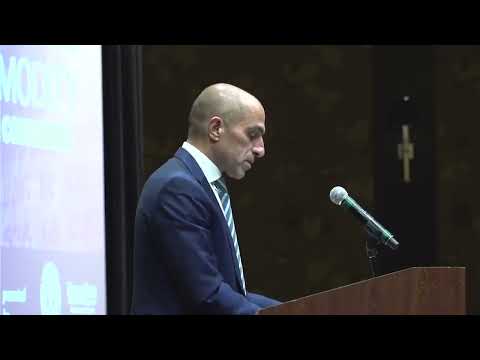
A CFTC enforcement panel and Department of Justice prosecutors used Kansas Citys AgCon to outline how civil and criminal authorities cooperate on cash-commodity misconduct and to summarize several high-profile matters.
Rob Schwarz, general counsel at the CFTC, described the agencys general anti-fraud and anti-manipulation authority under the Commodity Exchange Act and Rule 180.1 and said the agency uses that authority in cash markets when fraudulent or manipulative conduct touches on derivatives and price discovery. Mike ONeil of the DOJs fraud section described how criminal investigations rely on data analytics, suspicious-activity reports, tips and search warrants to recover communications and prove the specific intent required for criminal fraud charges.
Panelists summarized the Easterday Ranches scheme, in which prosecutors said false invoices and reimbursement requests were used to obtain about $233 million the defendant was not entitled to; DOJ pursued wire fraud charges and the CFTC filed related civil claims including exchange-reporting and position-limit allegations. Schwarz said the criminal case produced a substantial prison sentence in federal court and that civil and criminal authorities in parallel produced complementary outcomes.
The panel also discussed delivery-period manipulation allegations in the Craft wheat matter and related oat litigation, which focused on misleading signals and positions around delivery and on how exchange and cash markets interact. Rob Schwarz said the Craft case settled for $16 million after litigation and that courts have grappled with whether Rule 180.1 requires proof of fraud, manipulation or both.
Speakers emphasized cross-border cases in energy markets (Glencore, Vall, Freepoint) where bribery and benchmark reporting distorted commodity prices; DOJ said those investigations have produced corporate resolutions and criminal convictions and underscored the mutual-benefit of data-sharing and parallel enforcement while noting grand-jury secrecy limits in criminal probes.
Panelists closed by warning firms to retain trading-related communications on monitored systems and said failures to preserve records or to police off-channel apps can aggravate enforcement outcomes.