Get Full Government Meeting Transcripts, Videos, & Alerts Forever!
Get email alerts on the Bank Capital topic
No spam. Unsubscribe anytime.
GMAC warns CFTC: pending U.S. bank-capital rules could raise clearing costs and hinder end-user hedging
Summary
The CFTC's Global Markets Advisory Committee voted to send a recommendation urging the Commission to study and engage with bank regulators on proposed Basel III and G-SIB surcharge rules, which industry presenters said could raise banks' capital needs by roughly $7.2 billion and limit client clearing access.
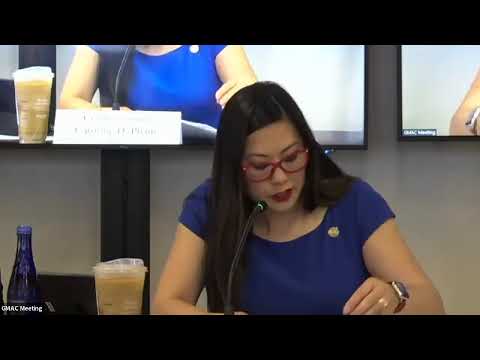
The CFTC's Global Markets Advisory Committee on Thursday adopted a recommendation asking the Commission to examine potential market impacts from pending U.S. bank-capital proposals and to continue engagement with U.S. bank regulators.
The recommendation, moved and approved by voice vote (28-0), follows a presentation from Kyle Glenn of the Futures Industry Association and a Cargill risk officer that summarized industry comment letters and independent data suggesting that proposals under Basel III "end-game" and a G-SIB surcharge could substantially raise capital requirements for major U.S. banks that provide client-clearing services.
Glenn said a joint FIA/ISDA data collection of six large U.S. global systemically important banks indicates an estimated increase in capital needs of about 22.4% (roughly $2.0 billion) from the Basel in-game proposal and about 58.1% (roughly $5.2 billion) from the G-SIB surcharge proposal, for a combined illustrative increase of roughly $7.2 billion (an ~80.5% aggregate change in the sample). He told GMAC members that such changes could reduce banks' capacity to offer client clearing, raise the cost of hedging and disproportionately affect smaller end users.
Than Twigs of Cargill urged the committee to consider impacts on agricultural end users and small farmers, warning that higher clearing costs or reduced capacity could leave some market participants unhedged. Twigs tied the potential market fallout to broader social consequences, noting that elevated hedging costs can ripple through supply chains and consumer prices.
The subcommittee recommended three next steps: (1) continued CFTC engagement with U.S. bank regulators on the pending proposals; (2) an independent study to assess impacts on derivatives end users; and (3) a focused roundtable with bank regulators on derivatives-market consequences. The motion passed and the recommendations will be transmitted to the Commission for consideration.
Why it matters: Several presenters and members said the proposals, if implemented without changes, risk concentrating clearing activity, reducing available counterparties and increasing costs for hedgers that rely on cleared markets for risk management. Members repeatedly flagged the decline in the number of futures commission merchants and the possible knock-on effects on liquidity and market resiliency.
What's next: The GMAC's recommendation asks the CFTC to use its convening authority to study and discuss the proposals with banking regulators and market participants before final rulemaking is adopted by other agencies. The recommendation will be transmitted to the Commission for its consideration.
"If the cost of providing client clearing rises significantly," Glenn told members, "you will see knock-on impacts on liquidity, volatility and the ability of end users to hedge."
Ending: The committee proceeded to its next agenda item after the vote; the GMAC's recommendations, including this transmission, are public record and will be available to the Commission and staff.