Get Full Government Meeting Transcripts, Videos, & Alerts Forever!
Get email alerts on the Climate Financial Risk topic
No spam. Unsubscribe anytime.
Advisory committee hears FSOC climate risk overview and private‑law concerns about voluntary carbon credits
Summary
FSOC and panel experts highlighted data gaps and transmission channels for climate‑related financial risk; a separate discussion flagged unresolved private‑law questions in voluntary carbon credit markets and barriers for small/minority producers seeking to participate.
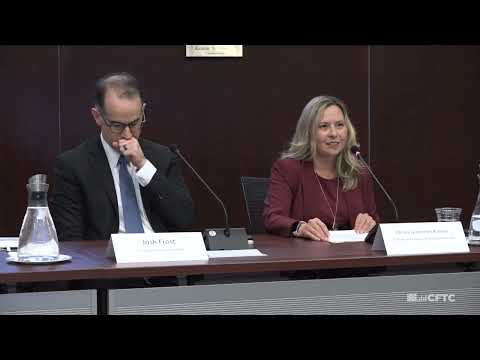
The MRA heard two climate‑related briefings: an interagency overview of climate‑related financial risk from the Financial Stability Oversight Council (FSOC) and academic and producer perspectives on voluntary carbon credit markets.
Sandra Lee (FSOC staff) summarized the council's 2021 report and subsequent work: development of climate risk indicators, efforts to close data gaps, pilot climate scenario analysis by the Federal Reserve, and concerns about insurance affordability and housing market impacts. FSOC officials emphasized the need for asset‑level data and ongoing interagency coordination.
Professor Christopher Odinet (Texas A&M) framed legal uncertainties in voluntary (verified) carbon credit markets, distinguishing them from regulatory credit regimes (e.g., California cap‑and‑trade). He identified unresolved private‑law issues—whether credits are property, their treatment in bankruptcy, collateral use, good‑faith purchaser protection, and transfer/settlement finality—that could affect how voluntary credits integrate with financial markets.
Producer Kim Ratcliffe (USDA advisory board) described barriers for small and minority producers: limited access to capital to enroll in offset projects, lack of technology and aggregation mechanisms, and concerns about land and collateral use. She urged co‑op models and program designs that lower participation costs.
No committee vote was taken on climate items; presenters and members agreed interagency data work and outreach to small producers should continue.