Get Full Government Meeting Transcripts, Videos, & Alerts Forever!
Get email alerts on the Downtown Zoning topic
No spam. Unsubscribe anytime.
Planning Commission recommends downtown zoning changes that would bar fuel islands
Summary
The Cedar City Planning Commission voted to recommend ordinance text amendments that would remove convenience stores with fuel islands from permitted uses in the downtown commercial zone and make other modest changes to the table of uses; commissioners said the goal is to preserve historic buildings and the downtown character. The recommendation will be forwarded to City Council for consideration.
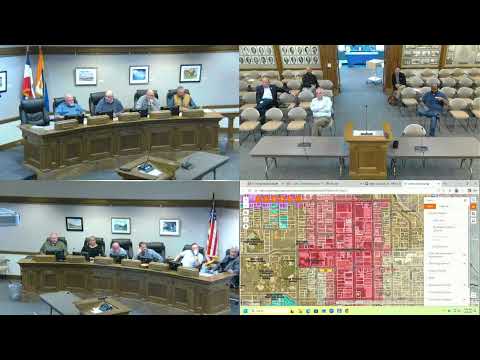
At its meeting, the Cedar City Planning Commission voted to give a positive recommendation to an ordinance text amendment that would remove convenience stores with fuel islands from the list of permitted uses in the downtown commercial zone, making fuel islands a nonconforming use for existing stations in the area.
Carter Wilkey, a member of Cedar City Council who brought the item to the commission, explained the proposal and mapped the affected downtown area as roughly 200 North to 200 South with specified frontage on Center Street. "The main idea behind this, as you can imagine, has to do with gas stations," Wilkey said, framing the change as an effort to protect the look and fabric of the historic downtown.
Brent Drew, chair of the Historic Downtown Committee, told commissioners he supports rules that limit larger convenience/fuel developments because he wants to avoid further demolition of downtown buildings. "I like what Maverick has done in that area. It looks very nice," Drew said, while adding that the concern is about much larger convenience stores and fuel islands that would require tearing down existing buildings.
Staff clarified the practical effect: three existing stations in the downtown footprint would become nonconforming uses if the ordinance is adopted, meaning they could continue to operate but would face restrictions on expansion. Staff explained that an expansion or redevelopment that increases the scale of a nonconforming use would trigger review—options cited included the Board of Adjustments or pursuing a development agreement with the city.
Commissioners and staff discussed related edits to the table of uses that would also loosen some restrictions (for example, allowing certain alcohol-related establishments and permitting defined-size breweries/wineries), and they debated how to treat electric vehicle charging where a large charging facility would be a primary use versus a smaller accessory charging installation.
After public hearing discussion and questions from commissioners, a member moved that the commission give a positive recommendation on the proposed ordinance text amendment (the motion referenced the ordinance section aloud); another member seconded. The commission voted in favor and the motion carried. The commission’s recommendation will be forwarded to City Council for its consideration; commissioners were reminded to specify in their motion which individual recommendations they support or oppose in any formal submission to council.
The meeting closed without a council decision on the ordinance; the commission’s recommendation is advisory and will be considered by the City Council at a later date.