Get Full Government Meeting Transcripts, Videos, & Alerts Forever!
Get email alerts on the Data Center Moratorium topic
No spam. Unsubscribe anytime.
Oliver County approves three‑year moratorium on data centers and crypto mining after large public turnout
Summary
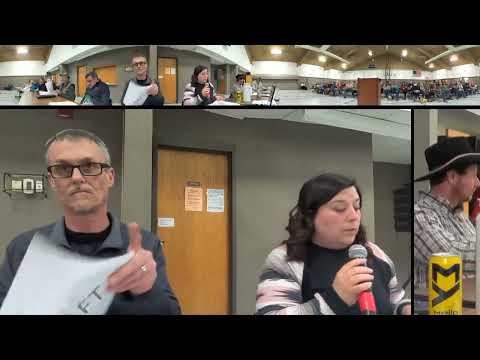
After about a dozen public commenters raised concerns about noise, water use, farmland loss and transparency, Oliver County’s planning board recommended a three‑year moratorium on data centers and cryptocurrency mining facilities and voted 4–3 to forward the recommendation to the county commission.
Oliver County’s Planning and Zoning Board voted Feb. 26 to recommend a three‑year moratorium on the development of data centers and cryptocurrency‑mining facilities so the county can draft zoning standards addressing siting, water use, noise, decommissioning and other community concerns.
The resolution under consideration (Resolution 2026‑02) would pause new data‑center and crypto‑mining development while the county develops land‑use code amendments. Staff framed the moratorium as temporary regulatory breathing room to ensure adequate review of large, 24‑hour industrial operations and to protect agricultural and residential uses.
Why it mattered: about a dozen members of the public signed up to speak. Petition organizer Shannon Muscowski told the board she circulated a petition and reported roughly 760 signatures (about 520 from North Dakota, roughly 208 likely Oliver County zip codes), and described potential on‑site impacts: “This data center will destroy the peace and the beauty that we moved here for.” Elizabeth Dagley, who cited multiple agency and research sources, warned that continuous low‑frequency noise from large mechanical cooling and backup systems can cause sleep disturbances and other health effects.
Public concerns voiced at the hearing included: potential noise and low‑frequency vibration; heavy construction traffic and road impacts; large water withdrawals for cooling and dust suppression; impacts on livestock and wildlife; loss of agricultural land; and a lack of clarity from developers about the facility’s use. Several speakers urged a moratorium long enough for comprehensive study and ordinance drafting, with suggested durations ranging from 90 days to three years.
Board deliberations focused on what moratorium length would be considered reasonable and politically viable when the recommendation reaches the county commission. Some board members noted the county previously used a moratorium for ordinance drafting; others warned that too‑short a period would not allow thorough rule writing.
Outcome: a motion to recommend a three‑year moratorium passed on a roll call: Linda (yes), Gary (yes), Cassie (yes), Troy (no), Bill (no), Jody (no), Matt (yes). The board recorded the motion as carried and will forward the recommendation and the draft resolution to the Board of County Commissioners for formal adoption and publication. The resolution text in the packet left the moratorium period blank; the board’s adopted recommendation specified three years.
Next steps: The recommendation will be sent to the county commission for public vote and publication; staff and board members said the moratorium could be shortened or terminated early if a final ordinance is adopted before the three‑year period expires.