Get Full Government Meeting Transcripts, Videos, & Alerts Forever!
Get email alerts on the Health Workforce topic
No spam. Unsubscribe anytime.
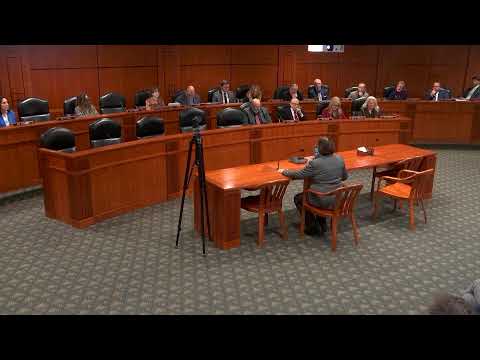
House panel debates licensure for anesthesiologist assistants as supporters and nurse anesthetists clash
Summary
House Bill 4832, which would create state licensure for certified anesthesiologist assistants, drew lengthy testimony and questioning. Supporters said licensure would reduce hiring barriers and help address workforce shortages; CRNAs warned it could reduce training capacity and offered safety and cost concerns.
The House Health Policy Committee took extensive testimony and held extended questioning on House Bill 4832, a measure introduced by Representative Preston to amend the Public Health Code and establish licensure for certified anesthesiologist assistants (CAAs).
Representative Preston opened the item by describing CAAs as graduate-level, non-physician anesthesia specialists who practice under the direct supervision of a licensed physician anesthesiologist. He said the bill formalizes licensure without expanding scope of practice and would help hospitals recruit and deploy CAAs to meet rising surgical demand.
CAA representatives including Danny Maseros (past president, American Academy of Anesthesiologist Assistants; Michigan Academy) testified in support, saying CAAs already practice in Michigan, licensure would not change supervision or scope, and it would reduce barriers that currently limit statewide deployment. "This bill is straightforward. It provides appropriate regulation. It supports hospitals and it improves access," Maseros said.
Opposition testimony came from Gina Welch, a certified registered nurse anesthetist and president of the Michigan Association of Nurse Anesthetists (MANA). Welch told the committee that because CAAs require physician supervision they are unlikely to expand rural access, could reduce clinical training capacity for CRNA students, and lack peer-reviewed safety evidence. "AAs are an unproven provider," she said, urging members to oppose HB 4832.
Physician groups countered that licensure removes credentialing friction that hospitals face when hiring unlicensed practitioners, provides a public oversight mechanism, and could enable retention and in-state training of CAAs. Eric Riley (Michigan Society of Anesthesiologists) and Tom George (Michigan State Medical Society) argued licensing would standardize qualifications and reduce legal and credentialing obstacles. Tom George noted a Michigan Supreme Court decision that limits liability protections for unlicensed practitioners, a factor hospitals consider when hiring.
Committee members asked detailed questions about the differences between CAAs and certified registered nurse anesthetists (CRNAs), supervision rules (physician must be immediately available at critical times in the facility), how licensure affects reimbursement and credentialing, and whether licensure would alter scope or independent practice. Witnesses gave differing figures when citing workforce counts—testimony referenced roughly 30 CAAs currently practicing in Michigan, while national and out-of-state counts were cited for comparison—but witnesses and members were careful to present those numbers as testimony rather than committee findings.
No committee vote on HB 4832 was recorded in the transcript. After additional institutional and academic testimony in favor (including Grand Valley State University associate dean Teresa Bacon Bagley describing how licensure enables educational pathways), Representative Foreman moved to excuse absent members and the committee adjourned.
The hearing captured a clear policy divide: supporters said licensure will reduce hiring barriers, improve credentialing and public oversight, and help meet surgical demand; opponents warned of potential impacts to CRNA training capacity, cost models, and the lack of AA outcome studies. Committee members requested follow-up details and data during questioning, indicating the debate will continue in subsequent work sessions.