Get Full Government Meeting Transcripts, Videos, & Alerts Forever!
Get email alerts on the Budget topic
No spam. Unsubscribe anytime.
Livingston Parish public schools adopt revised 2026 budget showing $12.9 million current-year deficit
Summary
Board members adopted a revised 2026 operating budget after a presentation showing a $12.9 million current-year deficit to be covered largely by prior-year surpluses and restricted reserves; increases in salaries and employer health insurance and the end of ESSER funding were cited as primary drivers.
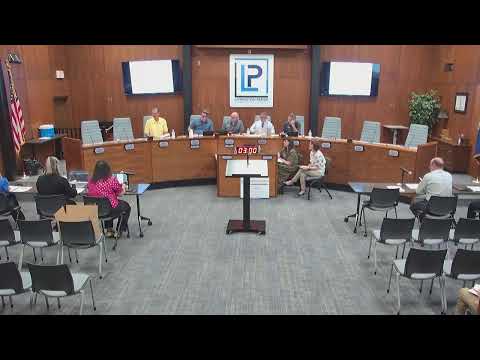
Members of the Livingston Parish Public Schools governing body adopted a revised 2026 operating budget after a budget presentation that showed a projected $12.9 million current-year deficit, officials said.
In the presentation, budget presenter Jeff Cox told members the general fund is projecting about $271 million in revenue, a decrease of $365,000 from the original budget, while general fund expenditures are projected at about $283.6 million, an increase of roughly $7.9 million from the original plan. "We're projecting revenues of approximately 271 million which is a decrease of 365,000 from the original budget," Cox said during the presentation.
Cox attributed the expenditure increases primarily to a locally approved salary supplement and higher employer health insurance costs. He said the local stipend approved last fall will cost the district about $6 million, and employer health insurance increases total about $2 million. "A small portion, approximately $2.5 million of the $12.9 million deficit will be covered by funds set aside as a restricted reserve," Cox said, adding that the remainder will be covered by undesignated prior-year surpluses.
The presenter told board members the district enters 2026 with a prior-year surplus of $66.8 million, leaving a net surplus of about $53.9 million after accounting for the current-year deficit; approximately $25 million of that is in restricted reserves and about $28.8 million is undesignated.
Cox also outlined other funds and drivers of spending: second sales tax revenues are projected at roughly $41.7 million with expenditures of about $49.5 million (a current-year deficit driven largely by transfers into construction), the 7-mill maintenance fund is projected to produce a modest surplus, the sinking (debt service) fund shows a small current-year deficit tied to bond obligations, and the construction fund is projecting a larger current-year deficit largely due to active capital projects. Cox listed ongoing and planned construction work including Southport Junior High, Albany projects, the Denim Springs High School fieldhouse and several Live Oak area multi-purpose buildings.
On school food services, Cox said revenues are projected around $18.2 million against expenditures of about $20.6 million; the district has expanded breakfast access to six additional schools this year, which Cox said produced about 135,000 extra breakfasts and roughly $400,000 in additional revenue so far.
Cox noted that federal ESSER funds have been exhausted for 2026 and that state funding (primarily through the MFP formula) remains the district's largest revenue source at about three-quarters of the general fund.
A board member identified as Ashley asked whether restricted reserves have set percentages; Cox replied that those reserves are rollovers from prior years and are designated for specific purposes (for example, funds set aside to help cover locally approved stipends).
The board voted to adopt the revised 2026 budget. The motion-maker was unclear on the audio/transcript (recorded as "Mr. I make the motion"); Mr. Cecil Harris is recorded as seconding the motion and the chair announced, "Motion carries." Later, Mr. Harris moved to adjourn and Mr. Link seconded; the board voted in favor and adjourned.
The revision leaves district leaders with a mix of restricted reserves and undesignated prior-year surpluses to cushion 2026 shortfalls; officials said they will rely on those balances and transfers between funds to cover projected gaps. The board did not specify additional cuts, new taxes or other new revenue sources during the meeting.