Get Full Government Meeting Transcripts, Videos, & Alerts Forever!
Get email alerts on the Transportation topic
No spam. Unsubscribe anytime.
Committee advances bill clarifying who can maintain low‑water "swinging" bridges in eastern Kentucky
Summary
Senate Bill 261, introduced by Senate President Styver, would define ownership, liability and permissive maintenance authority for low‑water 'swinging' bridges and permit cities and counties to expend funds for upkeep; committee approved a substitute and reported the bill favorably.
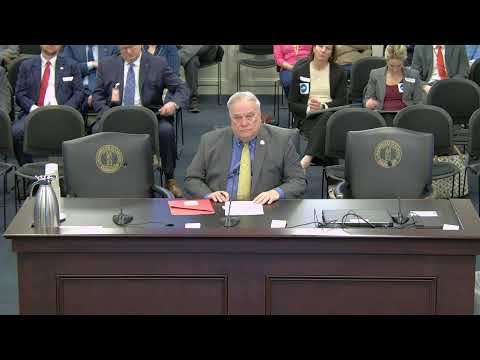
Senate President Styver told the committee that low‑water or "swinging" bridges are an important part of transportation in mountainous areas of eastern Kentucky, but ownership and maintenance responsibility are often unclear.
"Nobody knows who owns them, nobody knows who's responsible for them, nobody knows who has liability," Styver said, arguing the uncertainty discourages upkeep. He described the bridges as sometimes used for tourism and noted local officials' practical concerns when bridges wash out or become unusable.
SB 261 clarifies who can take responsibility for those bridges and allows cities and counties to expend funds for maintenance and upkeep if they choose. The committee adopted a substitute that added cities to provisions treating local governments similarly, then voted the bill out of committee with a favorable report.
Committee discussion in the transcript was brief; the substitute was adopted by motion and second before the roll call that recorded the committee's favorable report. The committee did not record a detailed fiscal note or a separate assignment of liability in the transcript; the sponsor emphasized that the bill's purpose is to eliminate uncertainty and permit maintenance spending by local governments.