Get Full Government Meeting Transcripts, Videos, & Alerts Forever!
Get email alerts on the Government Finance topic
No spam. Unsubscribe anytime.
Senate committee advances bill to raise local audit thresholds and allow less‑frequent audits after two clean reviews
Summary
The Senate State and Local Government Committee voted to advance SB 133, which raises statutory audit thresholds for local entities and lets entities with two consecutive clean audits move to less frequent audits, aiming to reduce costs and audit burdens while preserving transparency.
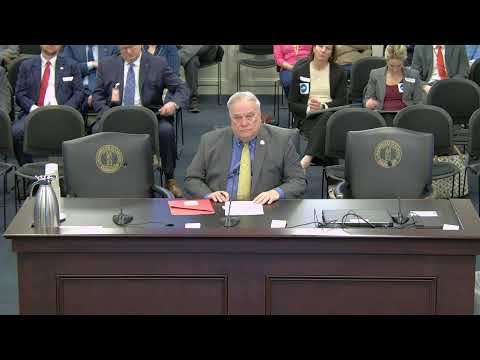
Senator Matt Nun told the Senate State and Local Government Committee that Senate Bill 133 began after conversations this summer with local park and health department directors who said audit requirements were increasingly burdensome and costly.
"They're having an increasingly difficult time finding an audit firm to conduct the audits," Nun said, describing examples of small governments paying a large share of their budget for audits. Nun said the bill raises the current statutory thresholds — moving the $100,000 threshold to $500,000 and the $500,000 threshold to $1 million — and creates a mechanism allowing entities that receive two consecutive clean audits to shift to a less frequent audit cycle.
Nun framed the change as a question of materiality and efficiency, likening it to private‑sector auditing standards: "We don't audit every department every year. We look at materiality so we're appropriately evaluating risks," he said.
Alex McGara, general counsel for State Auditor Allison Ball, attended the committee and was identified by the sponsor as a source of technical guidance during drafting. Nun said the auditor's office provided ideas for making audits "more efficient for taxpayers — not reducing transparency, but being more efficient."
Committee members did not record extended debate on the bill in the hearing transcript. The committee adopted a committee substitute and voted SB 133 out of the committee with a favorable report; the clerk recorded the committee vote as passing with a favorable expression (8‑0 in the committee report). The bill is expected to be considered on the Senate floor next.
If enacted, SB 133 would change when a local government or nonprofit must obtain formal financial statement audits and create an option to reduce audit frequency for entities demonstrating consecutive clean audit reports. The committee record did not include implementing language beyond the threshold changes and the two‑clean‑audit provision; details such as implementation timelines, transitional provisions, or administrative rulemaking were not specified in the committee discussion.