Get Full Government Meeting Transcripts, Videos, & Alerts Forever!
Get email alerts on the Health Care Reform topic
No spam. Unsubscribe anytime.
Senator urges shift to patient-controlled accounts, cites HSAs and 152525 savings
Summary
A senator who said he is a physician urged moving subsidies from insurers into patient-controlled accounts, citing studies that HSAs can cut family health spending by about 1525252525 and criticizing the Affordable Care Actmedical loss ratio for allowing insurers to retain roughly 2025 in overhead.
A senator who said he is a physician pressed lawmakers to shift health-care subsidies away from insurers and into patient-controlled accounts, arguing the change would reduce costs and expand access. "Obamacare failed to give access to all Americans to health care and Obamacare failed to control health care cost," the senator said, adding high deductibles and premiums block care.
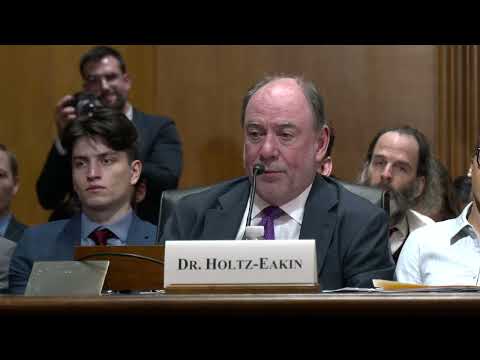
The senator asked Dr. Blaze to summarize the empirical evidence on health savings accounts. "Yeah, I mean, you can look at a 15 to 25% reduction," Dr. Blaze said, describing observed decreases in family health spending associated with consumer-directed accounts.
The senator pressed whether savings come at the expense of outcomes; Dr. Blaze said beneficiaries generally "end up just as healthy as before" and argued Americans can be trusted to make choices with consumer-directed funds. The senator framed part of that argument around household decision-making, noting that "women make almost all the healthcare decisions" for families and can shop for value.
Turning to insurer finances, the senator criticized proposals that he said funnel money to insurance companies rather than to direct patient care and asked about the Affordable Care Act's medical loss ratio (MLR). A witness summarized the MLR requirement as calling for insurers to spend roughly 8025 to 8525 of premiums on medical care, leaving about 1525 to 2025 for administrative costs and profit. The senator characterized that remainder as money "wasted on direct care" and urged a patient-directed alternative where funds would be usable for a physician, dentist, or drugs.
To support concerns about improper enrollments, the senator said he would submit an article alleging roughly a $233 million penalty levied on brokers for fraudulent enrollments in zero-premium policies. He acknowledged implementation concerns raised by critics but said HSAs can be paired with existing bronze-tier plans under current law.
The session closed with the senator asking colleagues not to be "entrenched" along partisan lines and urging them to consider patient-driven alternatives; he concluded his remarks due to time constraints.
Next steps were not announced in the transcript. No formal motion or vote on a specific bill appeared in the record provided.