Get Full Government Meeting Transcripts, Videos, & Alerts Forever!
Get email alerts on the Healthcare Policy topic
No spam. Unsubscribe anytime.
Cassidy proposes using enhanced premium tax credits on bronze plans, pre-funding HSAs to lower costs for ACA enrollees
Summary
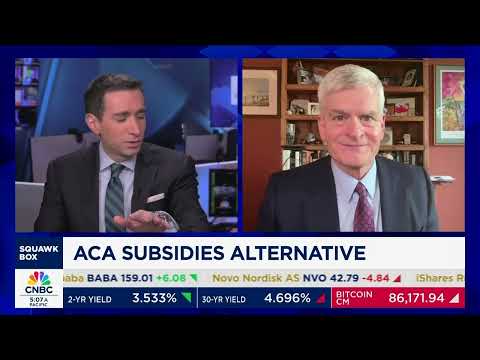
Senator Bill Cassidy told an interviewer he would let enhanced premium tax credits be applied to bronze plans and direct the savings into pre-funded health savings accounts to reduce premiums and out-of-pocket costs for people in the Affordable Care Act exchanges, a change he said could take effect Jan. 1, 2026.
Senator Bill Cassidy, chairman of the Senate Committee on Health, Education, Labor, and Pensions, described a proposal in a broadcast interview to let enhanced premium tax credits be used on less expensive bronze plans and to place the resulting savings into pre-funded health savings accounts (HSAs) for families.
Cassidy said the change would lower premiums and help families cover deductibles and copayments. "We take that entire $26 billion and give it to the patient," he said, arguing the federal government and consumers would save money while insurance companies would receive less revenue than under current law.
The senator framed the approach as targeted to Affordable Care Act exchanges, which he described as covering about 7% of the insured population; he said the other 93% — Medicare, Medicaid and employer plans — would be unaffected. Cassidy said his bill is intended to produce a solution effective Jan. 1, 2026, so people on the exchanges can continue to afford coverage.
On specifics, Cassidy contrasted what he described as current silver-plan deductibles (he referenced figures in the neighborhood of $5,000–$6,000) with the more limited out-of-pocket exposure under his plan, saying families could have up to roughly $4,000 available in an HSA to pay those costs. He said the arrangement would make bronze premiums cheaper and the pre-funded HSA would help the family pay a deductible or other out-of-pocket care.
The interviewer raised critiques that observers including Senate Democratic lawmakers and policy groups have leveled. He cited a report from the Center on Budget and Policy Priorities and comments attributed to Senator Jeanne Shaheen arguing HSAs do not address immediate premium increases because HSAs generally cannot be used to pay premiums. Cassidy responded that his design would continue enhanced premium tax credits and preserve limits so that "nobody who's at ... 600% of federal poverty would pay more than 8.5% of their premium," while using a cheaper bronze premium so savings can be put into the HSA.
Cassidy acknowledged political obstacles but argued the plan could attract bipartisan support. "It's not a Republican plan. It's not a Democratic plan. It's an American plan," he said, adding he believed it could appeal to lawmakers with different priorities and that he "handicaps" its chances as favorable.
The proposal, as described in the interview, remains a legislative concept: Cassidy identified policy design features and a target effective date but did not cite a bill number, formal enrollment estimates from agencies, or a finalized legislative text. It is not clear from the interview whether Congressional committees have scheduled hearings or what legislative timeline Cassidy will pursue next.