Get Full Government Meeting Transcripts, Videos, & Alerts Forever!
Get email alerts on the Health Care Finance topic
No spam. Unsubscribe anytime.
Cassidy outlines plan to convert enhanced ACA subsidies into health-savings-account contributions
Summary
Sen. Bill Cassidy described a plan to convert enhanced premium tax credits under the Affordable Care Act into federal contributions to health savings accounts, saying baseline subsidies would remain and that the change could be ready in 2026; he argued the approach would lower net costs for people with high deductibles.
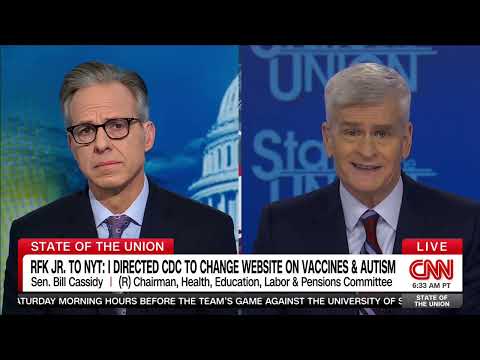
Sen. Bill Cassidy laid out a proposal to change how enhanced premium tax credits under the Affordable Care Act are delivered: instead of larger premium subsidies flowing as additional premium assistance, Cassidy said the extra funds would be deposited into health savings accounts (HSAs) to help people pay deductibles and out-of-pocket costs. "What we would do is take the enhanced premium tax credits and we'd still make sure that patients don't pay too much as a percent of their income for the insurance but we would take the extra amount that's available and put it into a health savings account," Cassidy said.
Cassidy said the plan would leave baseline premium tax credits untouched and target only the enhanced portion enacted during the Biden administration to blunt rising costs. He argued the change would encourage consumers to choose less expensive "bronze" plans while letting HSA funds cover high deductibles; "on net, the cost of being insured... would be less," he said.
He framed the proposal as a near-term and longer-term approach. "So yes, we're working on it. Yes, we can do it. And yes, I think we can have it ready for 2026," Cassidy said. He also cited a line of criticism about insurers, asserting on-air that "when you give money to insurance companies, 20% of that goes for profit and overhead."
The host noted Republicans face a tight deadline: current enhanced subsidies are set to expire in just over five weeks, and Cassidy acknowledged the party has not yet reached consensus. Cassidy said some Republican proposals aim for later implementation; he identified his plan as both a current-year fix for affordability and a longer-term change. He also said the legal framework for aspects of the plan already exists and that the first priority is helping people who may otherwise lose coverage.
Cassidy's remarks did not spell out legislative text, implementation mechanics, or how the proposal would affect low-income enrollees who rely on premium reductions rather than HSAs. The interview did not include formal votes or a congressional timeline; Cassidy described ongoing coordination with the Trump administration and other senators on policy details.