Get Full Government Meeting Transcripts, Videos, & Alerts Forever!
Get email alerts on the Housing Tenant Protections topic
No spam. Unsubscribe anytime.
Committee advances Safe, Healthy Homes package after hours of testimony
Summary
Philadelphia City Council’s housing committee approved amendments and reported two ordinances that would create proactive inspections, expand good-cause eviction protections and strengthen tenant remedies; the hearing featured testimony from health experts, tenant organizers and landlord groups urging changes to implementation language.
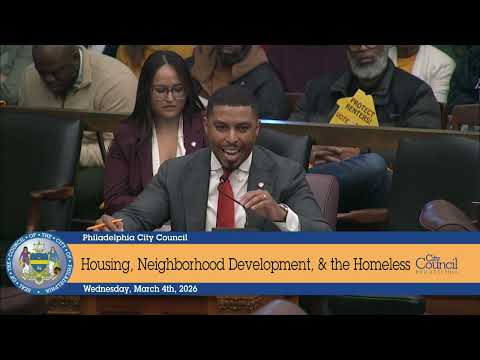
Philadelphia’s City Council committee on Housing, Neighborhood Development, and the Homeless on Thursday advanced a two-part ordinance package aimed at strengthening tenant protections and habitability enforcement, approving amendments by voice vote and reporting both bills out of committee with a favorable recommendation for first reading.
Councilmember Nicholas Oor, the sponsor, said the legislation was driven by tenant testimony. “The stories that inform the creation of this legislation come from the tenants,” he told the committee, framing the bills around a “right to repairs” and protections against landlord retaliation.
The package includes Bill 2550329, which would amend chapter 9-3900 of the Philadelphia Code to clarify licensing rules, authorize a proactive inspection pilot through the Department of Licenses and Inspections (L&I), require public reporting on code compliance, and create additional remedies and damages for tenants; and Bill 2550330, which would amend chapter 9-800 to expand good-cause protections, add anti-retaliation measures, strengthen implied-warranty-of-habitability presumptions, and create a tenant right to organize.
Health and tenant testimony dominated the hearing. Dr. Tyra Bryant Stevens, chief health equity officer at CHOP’s Center for Health Equity, cited decades of disparities and the institution’s programmatic evidence linking housing disrepair to worse asthma outcomes: “When we make those home repairs to remove the source of asthma triggers exposure, we reduce asthma-related emergency room visits by 40% and hospitalizations by 70%,” she said. Tenants described collapsing ceilings, persistent mold and delayed repairs; Sincere Wilson said his living-room ceiling “collapsed,” and Katie Ashby testified that a landlord painted over an active leak that later produced extensive black mold.
City officials signaled administrative support with caveats. Commissioner Bridget Collins Greenwald of Licenses and Inspections said the administration supports the legislation’s intent and that recent amendments had addressed earlier implementation concerns: “We believe the administration’s concerns have all been addressed and that the bill as amended can be successfully implemented,” she told the committee. Renee Chault Fatah, executive director of the Philadelphia Commission on Human Relations, described the Fair Housing Commission’s enforcement role and endorsed provisions protecting tenant organizing.
Landlords and industry groups urged caution in drafting and implementation. Paul Cohen, a longtime landlord attorney, told the committee that some definitions and the timing of late amendments could create unintended liability for well-intentioned owners and argued for a stronger safe-harbor: “This safe harbor doesn’t accomplish that,” he said, offering an example about inherited properties where owners might be exposed to large retroactive claims. Steven Chintman of the Pennsylvania Apartment Association said his group supports safe, maintained housing but urged the committee to “hold these bills and allow continued meaningful engagement” to fix drafting issues.
Committee action was procedural but decisive. After moving into a public meeting, Vice Chair Landau offered and the committee approved amendments to both bills by voice vote; the chamber then voted to report Bill 2550329 and Bill 2550330 (each as amended) with a favorable recommendation and requested suspension of the rules to allow first reading at the next council session. The motions carried on voice votes; the transcript records the results as voice votes (“the eyes have it”) but does not provide roll-call tallies.
Public comment following the committee actions was extensive and split along lines familiar from the hearing: tenant advocates, public-health professionals and faith leaders described unsafe conditions and urged rapid passage, while many small landlords warned that broad penalties, uncertain compliance deadlines, and administrative timing could drive responsible owners from the market and reduce affordable supply. Several speakers asked that the bill’s final drafting include explicit protections for landlords who act in good faith and clarified procedures for certification, tenant sign-offs and appeals.
Next steps: the committee reported both bills out with a favorable recommendation; the sponsor and multiple members said they will continue stakeholder engagement to refine implementation details before full Council consideration. The bills are slated to appear for first reading at the next City Council session.