Get Full Government Meeting Transcripts, Videos, & Alerts Forever!
Get email alerts on the Mental Health topic
No spam. Unsubscribe anytime.
Nash County students urge commissioners to fund teen mental‑health outreach
Summary
Two Nash Early College students representing the YMCA Teen Mental Health Advisory Council asked the board to fund awareness campaigns and expand family and school outreach, citing CDC statistics on youth suicidal ideation and bullying. They urged county action to improve access to crisis resources.
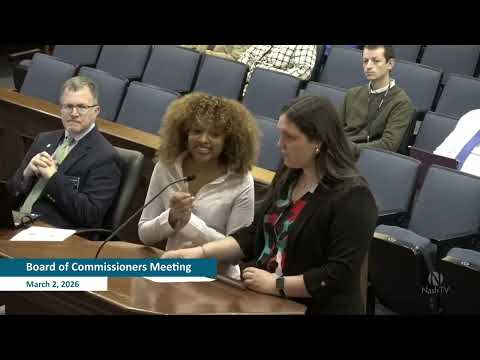
Two 11th‑grade students from Nash Early College High School told the Nash County Board of Commissioners on March 2 that more county support is needed for teen mental health.
Ka Richardson and Payton Jones, who said they represent the YMCA Teen Mental Health Advisory Council of North Carolina, described common stressors for teens — bullying, economic hardship, social media pressure, anxiety and depression — and said many students lack someone to turn to. “Imagine being 16 years old, sitting in class, surrounded by people, but feeling completely alone,” Richardson said, pressing the board to expand access to information and crisis resources.
The students cited CDC figures during their remarks, noting that roughly one in five high‑school students have seriously considered attempting suicide and that students who experience bullying are at greater risk of anxiety and depression. They proposed county funding for communitywide awareness campaigns to reduce stigma, educate families on warning signs and publicize where teens and families can seek help.
The presentation was delivered during the meeting’s public‑comment period. Commissioners did not take formal action during the meeting but staff and commissioners later discussed connecting the students with county services and follow‑up opportunities.
The students left their materials with county staff and requested the board consider additional funding and advocacy for mental‑health resources across local schools and community organizations.