Get Full Government Meeting Transcripts, Videos, & Alerts Forever!
Get email alerts on the Sextortion Education topic
No spam. Unsubscribe anytime.
Advocates and survivors press Minnesota Senate panel for $125,000 to expand 'Power Over Predators' education
Summary
Advocates and survivors urged the Senate Judiciary Committee to fund Power Over Predators, a prevention curriculum addressing sextortion and online exploitation; lawmakers adopted an amendment to use an RFP process and laid the bill over for later action.
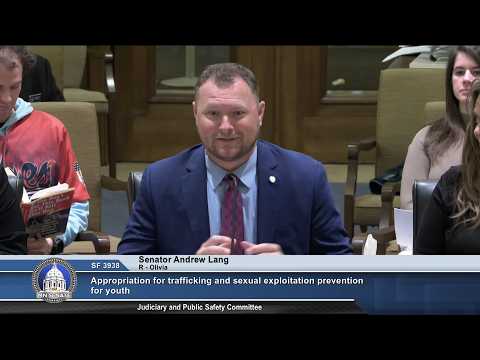
ST. PAUL — Advocates and survivors told the Minnesota Senate Judiciary Committee on March 11 that the state should provide one-time funding to expand a sextortion-prevention curriculum known as Power Over Predators.
“My name is Ashley Moore and I’m the executive director of nonprofit called CAST Citizens Against Sex Trafficking,” Ashley Moore told the committee, asking for $125,000 to scale the program statewide. “We’re at the point now where demand is outpacing our capacity.”
Power Over Predators (POP) is a licensed curriculum Moore said teaches online safety and healthy relationships in middle and high schools. Moore told senators POP served about 4,800 community members last year and the organization expects to reach more than 8,000 this year if it can expand its training and licensing in Minnesota.
Survivors and a mental-health professional described why lawmakers should fund prevention. “Power Over Predators gives our youth what I never had,” survivor Jennifer Flaherty said, explaining how early abuse shaped her life. A parent and mental-health professional from Olivia recounted that his son died by suicide after being sextorted online and said predators can move quickly from social media to private apps to demand money.
Senator Holmes offered an A1 amendment to convert the bill’s direct appropriation to a request-for-proposals process so multiple providers could apply for funds. Senator Langer characterized the change as procedural; the committee adopted the amendment by voice vote. The bill, as amended, was laid over.
Committee members asked witnesses to focus testimony and offered to accept additional technical edits from state agencies. Moore said she was open to a language change suggested by the Department of Health.
The committee took no final funding vote; its action was to adopt the procedural amendment and lay the measure over for further consideration.