Get Full Government Meeting Transcripts, Videos, & Alerts Forever!
Get email alerts on the Safe Routes To School topic
No spam. Unsubscribe anytime.
Safe Routes to School coordinator details quick-builds and pandemic-era changes; TAP grant salary support likely ending
Summary
Safe Routes to School coordinator Kyle Rodlin updated council on program history, pandemic-driven adjustments (expanded walk zones, bus shortages), 137 quick-build projects (seven later made permanent), expanded school bike fleets, and warned that future TAP grant rules may preclude salary funding for the position.
Kyle Rodlin, Charlottesville's Safe Routes to School coordinator, briefed council on program developments and pandemic-era changes that reshaped student transportation.
Rodlin said the program, started in 2016, expanded from education-focused outreach to include infrastructure and planning after the pandemic. He described a spike in walking and biking trips to school (citywide walk/ride student share rising from about 7% in 2016 to roughly 14% today) and explained that bus capacity and driver shortages during the pandemic prompted the city and schools to expand walk zones and create a student-transportation committee to coordinate responses.
Rodlin highlighted quick-build infrastructure: 137 quick-build projects implemented in 2023-24, seven of which have been made permanent with curb and landscaping. He described walking-school-bus programs (organized, paid adult routes with defined student lists) and school bike fleets used in PE and after-school programs; the city is exploring expanding fleets and a maintenance plan.
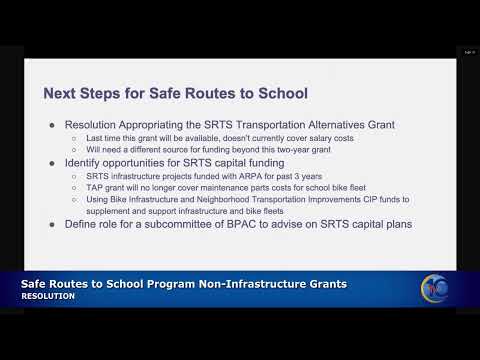
On funding, Rodlin noted the program has relied in part on the Federal TAP (Transportation Alternatives) non-infrastructure grant to support coordinator salary; he said VDOT informed staff that program maturity and federal program changes mean this may be the last TAP cycle in which federal funds pay that portion of salary. Rodlin and Ben Chambers asked council to consider local funding options for ongoing program salary and capital needs.
Why it matters: The program's quick-builds and school-focused investments have increased active travel and changed maintenance and prioritization practices, but the city will need a plan to sustain staff and fleet costs as federal support for salaries wanes.