Get Full Government Meeting Transcripts, Videos, & Alerts Forever!
Get email alerts on the Ada Transition Plan topic
No spam. Unsubscribe anytime.
Charlottesville unveils draft ADA transition plan identifying 48,038 barriers and $125M right-of-way estimate; council set to consider April 21 adoption
Summary
City staff and consultant Precision Infrastructure Management presented a draft ADA transition plan that found 48,038 barriers across 167 miles of city-owned sidewalks, roughly 2,700 facility barriers, and digital accessibility issues; the presentation recommended a multi-year program, alternative maintenance methods to reduce costs, and an April 21, 2025 adoption date for council consideration.
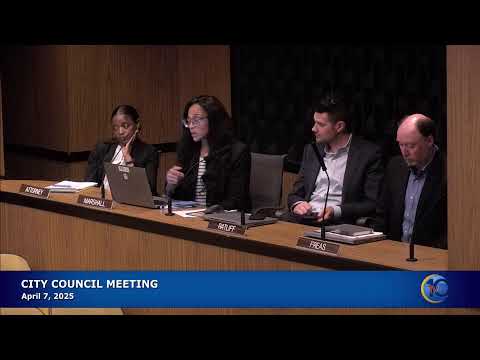
Charlottesville officials presented a draft Americans with Disabilities Act transition plan on April 7, 2025 that lays out an inventory of physical, digital and programmatic barriers and recommends a multi-year remediation program.
The plan, prepared with consultant Precision Infrastructure Management, reported field assessments of 167 miles of Charlottesville-owned sidewalks and identified 48,038 individual barriers, including roughly 27,000 vertical height displacements and about 2,900 non-compliant curb ramps. The consultant estimated an "all-in" right-of-way remediation cost of about $125 million (material-only baseline) and emphasized the savings possible through alternate maintenance methods: "If you use horizontal saw cutting instead of traditional demolition replacement, you save a substantial amount," consultant Charlie Zold said.
Paul Ruticell, the city's ADA coordinator, framed the work as a legal and civil-rights responsibility, saying, "Disability rights are civil rights," and described the plan as a "living document" intended to guide prioritized, year-by-year remediation and cultural change across city departments.
Why it matters: the plan covers sidewalks, public buildings, parks and digital services. It recommends a combination of lower-cost repairs (for example, horizontal saw cutting for many trip hazards) and targeted replacement where panels or facilities are too degraded. The presentation stressed the need for coordinated budgeting and department-level work plans so the city can translate the assessment into on-the-ground fixes.
Key findings and recommendations
- Sidewalks and right-of-way: the consultant said it assessed 167 miles of city-owned sidewalks and logged 48,038 barriers; vertical height displacements (trip hazards) made up about two-thirds of that total. The team noted many barriers are typical for older infrastructure and recommended prioritizing streets with higher barrier density.
- Cost and budgeting: the report gave a material-only right-of-way estimate of about $125 million and explained material-only figures exclude labor (presenters said labor is often roughly equal to materials). The consultant recommended alternative maintenance activities that could dramatically reduce cost for many trip-hazard repairs; one example compared $67 million via demolition/replacement to $16 million using saw cutting on a subset of repairs. Staff said an initial budget scenario discussed during planning included $1 million in year one and $2 million annually in years 2–5, with the expectation the city will revisit and refine those amounts.
- Facilities and parks: 42 facilities were assessed with roughly 2,700 barriers identified; the team noted that facility remediation often requires project-specific study and can include capital investments such as replacement restrooms or redesigns that are difficult to estimate without further work.
- Digital and programmatic access: the digital audit sampled site templates and documents and flagged numerous accessibility problems (the presentation cited a large number of PDF and web-template issues). The team recommended adopting WCAG-aligned policies, citywide vendor accessibility requirements, and standardized public-notice practices.
- Implementation and culture: the plan proposes a maturity-model approach with incremental, measurable improvements year to year, expanded staff training, a formal grievance process, and ongoing use of data systems (BlueDAG for facilities and Esri/ArcGIS for right-of-way) so the plan remains a living document.
Council response and next steps
Councilors pressed staff for a clear annual work plan tied to allocated funds. Council asked who is responsible for certain repairs — for example, whether the city or utilities move telephone poles that obstruct sidewalks — and staff replied that relocation typically requires partnership with the utility (Dominion) and sometimes easements. Staff said the draft plan and associated data are available on the city website and asked the public to submit feedback; they indicated they plan to return on April 21, 2025 for possible adoption pending public comment and final edits.
The presentation and Q&A also yielded specific implementation commitments: staff will work with department leads to produce a recommended annual action plan that lists projects that can be completed with the budgeted amounts and will return with a reporting structure so councilors can track progress.
The council moved into a closed session later in the meeting; staff said they will bring the draft ADA transition plan back to the council for formal consideration on April 21, 2025.