Get Full Government Meeting Transcripts, Videos, & Alerts Forever!
Get email alerts on the Recycling topic
No spam. Unsubscribe anytime.
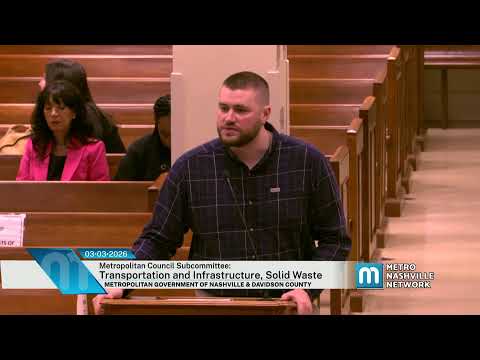
Subcommittee hears recycling processing is on emergency PO; RFP with tentative March 17 launch and outreach plans underway
Summary
Staff told the Solid Waste Subcommittee that recycling processing is currently paid under an emergency purchase order, a procurement RFP is pending (tentative launch March 17) and department staff outlined education plans and participation figures to boost recycling setout rates.
Department staff told the Metro Nashville Solid Waste Subcommittee that recycling processing is currently being handled under an emergency purchase order while a new RFP is in procurement. The department said the RFP has a tentative launch date of March 17 and staff hope to have contracts in place by summer if procurement proceeds as planned.
Matt, a department staff member, said the processing facility a contractor operates determines what materials can be accepted curbside because facilities differ in what they can process and market. “It’s all about the market,” he said, explaining that local processing capacity and buyer demand limit curbside acceptance of additional plastics and other materials.
Jen Harmon, who runs education and outreach for the department, described efforts to increase participation: informational inserts on carts, a strategic education plan that includes partnering with Metro Nashville Public Schools to reach students (who can in turn inform parents), targeted outreach to neighborhoods with low setout rates and volunteer canvassing. Staff reported about 112,000 recycling customers (compared with 144,000 trash customers) and observed recycling setout rates rising to roughly 70% in a recent surge.
Committee members asked whether recycling saves money; staff said diversion is the primary goal and some marketing revenue can offset costs, but collection and processing still carry significant expenses. The subcommittee requested updates on the procurement timetable and education outcomes; no formal votes were taken.