Get Full Government Meeting Transcripts, Videos, & Alerts Forever!
Get email alerts on the Utilities Wastewater topic
No spam. Unsubscribe anytime.
Resident raises questions about proposal to transfer Lowell City wastewater plant to Two Rivers
Summary
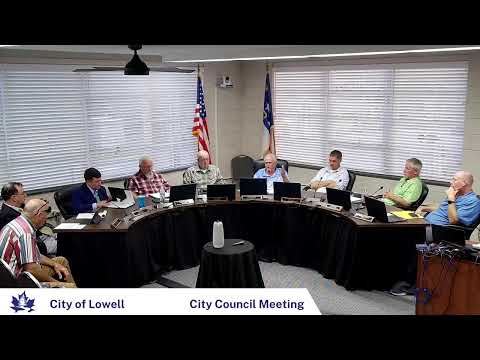
At the Sept. 10 Lowell City Council meeting, resident Richard Lynch urged the council to pause plans involving Two Rivers and the city's wastewater treatment plant, saying the plant "generates $680,000 a year" and asking for bids, studies and a resolution before any transfer. Council members did not resolve those questions on the spot and directed follow-up.
Richard Lynch, a Lowell resident, told the City Council on Sept. 10 that the city’s wastewater treatment plant is a valuable revenue source and urged council members to slow any plan that would turn the asset over to Two Rivers.
“I’ll be the first one to tell you that I don’t know a lot of things, but our wastewater treatment plant generates about $680,000 a year, with about $400,000 in profits,” Lynch said during the public-comment period, and questioned whether the city had obtained engineering estimates or multiple bids for needed repairs and upgrades. He said he was told a $5 million low-interest loan and a $2 million grant might be contingent on dealing with Two Rivers and asked why the city would surrender an income-producing asset for an external operator without full cost analysis.
Lynch pressed the council for specific information: how many estimates the city had obtained for repairing or replacing the treatment plant and the collection system, who would pay future repair and maintenance costs, and whether any conflict-of-interest existed because a city public-works director had previously worked for Two Rivers. He also said he had asked the council to place a resolution on the agenda to stop payments to consultants until the acting city manager obtained at least three bids for work on the plant, the collection system and the cost to tie into Two Rivers’ facility.
Council members acknowledged Lynch’s concerns during the meeting but did not provide detailed answers during public comment. Staff and the council later continued routine agenda business; there was no immediate vote or formal decision recorded on the Two Rivers matter during the Sept. 10 meeting. The meeting record shows council asked staff to gather further information on multiple agenda items that night, but a timeline for a formal response on the wastewater questions was not specified on the record.
Context and next steps: Lynch cited a range of cost estimates he found online and argued the figures he had seen did not support claims that replacing the plant would cost tens of millions of dollars. The claims Lynch presented are his own research and assertions made in public comment; the council did not provide independent verification during the meeting. Council members will need to confirm revenue figures, obtain firm engineering and cost estimates, and respond to Lynch’s request for a resolution or additional public notice before any transfer or contract with Two Rivers moves forward.
Lynch’s full list of requested studies and the motion he sought to place on the agenda — no further consultant payments until three bids were obtained for repairs, upgrades, replacement, and tie-in costs — was read into the record as part of his public comment. The record shows the council did not adopt that resolution at the Sept. 10 meeting.
What was not resolved: Who would pay long-term collection-system upgrades if the plant and billing are transferred to an outside operator; whether the $5 million loan and $2 million grant are explicitly contingent on contracting with Two Rivers; and whether the city has current, independently verified engineering estimates for repair, expansion or replacement. Those remain outstanding items for staff follow-up.