Get Full Government Meeting Transcripts, Videos, & Alerts Forever!
Get email alerts on the Affordable Housing Legislation topic
No spam. Unsubscribe anytime.
Fanwood mayor and planner outline new state affordable-housing rules and tight deadlines
Summary
At a Sept. 11 public forum, Mayor Colleen Mah and planner Caroline Raider explained New Jersey's round-four affordable-housing law, described how municipal obligations will be calculated, and warned of fast-approaching deadlines: DCA's municipal obligations are due on or by Oct. 20, 2024, and Fanwood's governing body must adopt a binding resolution by Jan. 31, 2025, or risk exposure to builders-remedy litigation.
Fanwood Mayor Colleen Mah and the borough's planning consultant laid out how recent state changes to New Jersey's Fair Housing Act will affect the borough and its zoning obligations, emphasizing several firm deadlines that will require quick local action.
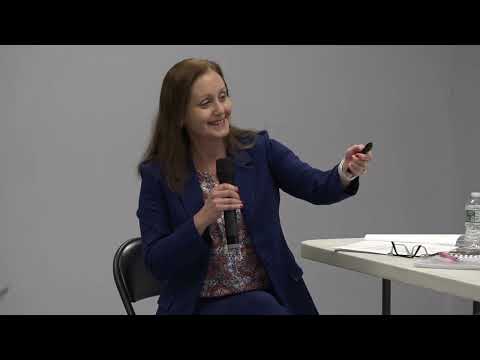
"We have always tried to be very open and transparent about what affordable housing means," Mayor Colleen Mah said as she opened the Sept. 11 meeting and introduced planners and borough staff. Caroline Raider, planning-group manager at TNN/TNM Associates, told residents the new law creates a statewide formula for calculating municipal obligations, revives a formal dispute-resolution program and moves the state into what officials are calling a fourth round of obligations.
Why it matters: under the timeline outlined at the forum, the state Department of Community Affairs is scheduled to release each town's round-four obligation on or by Oct. 20, 2024; the governing body must adopt a binding resolution stating the municipality's obligation by Jan. 31, 2025; and interested parties will have until Feb. 28, 2025, to challenge that resolution. Raider said, "If there is no challenge to a municipality's obligation by March 1st that is their obligation," and warned that failing to meet the Jan. 31 deadline could leave a municipality vulnerable to exclusionary-zoning litigation commonly called "builders remedy" suits.
How obligations will be calculated: Raider explained the statewide/regional process starts with a total state need that is apportioned to regions and then to towns using three factors: equalized nonresidential valuation (tax assessment data), income-capacity (census data) and land capacity (vacant or developable land). She emphasized that land-capacity mapping is the most uncertain input and said municipalities can pursue a vacant-land adjustment or "Realistic Development Potential" (RDP) calculation to define site-specific units that will satisfy a portion of a town's obligation.
"Land capacity is important," Raider said, noting past mapping sometimes counted non-developable parcels (medians, cemeteries) as vacant. Under the new rules, she explained, municipalities may see the first 25% of unmet need required to be met with site-specific zoning, with the remainder addressed by overlay zoning or other zoning tools that create realistic development opportunities.
Credit types and changes: Raider listed project types and credits that towns can use to meet obligations, including inclusionary developments (mixed market-rate and affordable set-asides), 100%-affordable municipally sponsored projects, supportive- and special-needs housing and several bonus credits (for transit proximity, supportive housing, rehabilitation, and others). She flagged one major change from prior COAH-era rules: "the rental bonus is no longer available," removing a commonly used source of extra credit for towns that relied on rental commitments.
Fanwood status: officials told attendees Fanwood has largely satisfied its earlier round obligations and that the borough's RDP was satisfied under prior processes (with only one unit outstanding from earlier rounds). Diane deis, the planning-board attorney who also advises on affordable housing, and Borough Administrator Jesse mman said the borough has already begun vacancy-land and density analyses to be ready when DCA issues the round-four numbers.
Public questions and clarifications: during audience Q&A, residents asked about overlay zones, how obligations are calculated, whether informal housing arrangements count, and how the master plan process would be affected. Raider explained that overlay zoning preserves the underlying permitted uses while allowing housing opportunities in commercial corridors; Diane added examples in Fanwood's CC corridor where adaptive reuse and mixed residential projects have occurred. On deed restrictions, staff said affordable units are currently deed-restricted for 30 years (with the legislation proposing an increase to 40 years) and must be affirmatively marketed and assigned by lottery to income-qualified households.
On informal arrangements a resident asked, "why my adult child living at home doesn't count as affordable housing?" Raider and Diane replied that a household does not count as an affordable unit unless the unit itself is deed-restricted, affirmatively marketed and meets program rules: "your unit needs to be deed restricted as an affordable unit," Raider said, and marketing and lottery processes prevent counting private, informal arrangements as meeting the town's legal obligation.
Next steps: borough staff and consultants said they will continue vacant-land and density analyses, complete required reporting inputs (the state-required reporting form has a September 16 input for trust-fund and unit data), and prepare to adopt a binding resolution by Jan. 31, 2025. Raider said a new dispute-resolution program established by the law is expected to handle challenges and that the borough will publish the presentation and follow up with residents. "These dates are set in stone," she said, urging residents and officials to remain engaged.
The borough plans to post the presenter's slides and the meeting video to the municipal website and public-access television; officials encouraged residents to contact staff with follow-up questions.