Get Full Government Meeting Transcripts, Videos, & Alerts Forever!
Get email alerts on the School Safety topic
No spam. Unsubscribe anytime.
Minn. committee stalls 'Safe Schools' bill amid fight over K–3 suspensions and funding flexibility
Summary
The House Education Finance Committee debated House File 3493’s package of school-safety funding, anonymous-reporting systems and changes to K–3 discipline. Supporters urged flexibility and a limited suspension tool for acute incidents; opponents said rolling back non-exclusionary-discipline protections would harm young children and students with disabilities. The motion to refer the bill failed.
The House Education Finance Committee on April 14 considered House File 3493, a broad “Safe Schools” package from Representative Lawrence that would increase funding for school safety measures, expand anonymous threat‑reporting systems and create new disciplinary options for kindergarten through third grade. After more than two hours of testimony and member debate, the committee did not advance the bill.
Representative Lawrence, the bill author, told the committee the measure is a bipartisan, multi‑layered approach intended to protect students in public, charter and tribal schools and to give local districts flexible tools. "This bill is to create a safe learning environment for all students," Lawrence said when introducing the DE (delete‑all) amendment.
Supporters — including district leaders, principals and advocates for school safety — said the bill responds to rising high‑intensity behavior incidents in some classrooms and to real operational needs. "Our district has seen 142 K–3 classroom evacuations," said Corey McIntyre, superintendent of the Anoka‑Hennepin district, arguing that short, targeted dismissals can give teams time to plan interventions. Principal Taneisha Novel described incidents including arson and staff injuries that, she said, exceeded the capacity of existing responses and required immediate options.
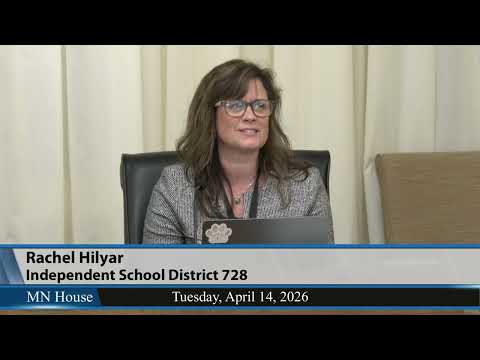
Several presenters urged increased funding for proven prevention. Rachel Hill, director of prevention and safety for ISD 728, credited her district’s anonymous reporting system with 173 tips since inception and said it had helped prevent planned attacks and suicides. Mental‑health professionals urged that funding for licensed student‑support personnel (counselors, psychologists, social workers) remain dedicated to those roles rather than become fully fungible with building security spending.
Opponents — including Legal Aid, disability advocates, and organizations opposed to suspensions for young children — argued the bill would roll back hard‑won protections. A Legal Aid staff attorney warned that repealing the prohibition on exclusionary discipline for K–3 students would risk pushing young children out of school and would disproportionately harm children of color and students with disabilities. "We do not believe this is the legislation we need," a Legal Aid representative said. Advocates from the Pacer Center and disability organizations requested explicit IDEA‑alignment language and stronger guardrails for threat‑assessment practices.
Committee members pressed both sides on the trade‑offs. Several lawmakers expressed concern that making the student‑support personnel aid fully flexible could allow districts to redirect prevention staff funding into physical hardening, reducing the in‑school adults who build relationships with students. Proponents countered that the bill preserves options and funding for mental‑health services while giving districts additional tools for acute crises.
When the author moved the bill as amended for referral, the motion failed to receive the necessary 13 votes and HF 3493 was laid over without referral. The committee’s debate highlighted a central tension: whether to prioritize immediate operational tools for managing severe behavior and safety threats or to protect and grow prevention‑oriented mental‑health staffing and limits on exclusionary discipline.
What’s next: committee chairs said they want to keep discussing funding sources and details; no vote was taken to enact the changes today and the bill will be revisited in future committee action.