Get Full Government Meeting Transcripts, Videos, & Alerts Forever!
Get email alerts on the Local Economic Development topic
No spam. Unsubscribe anytime.
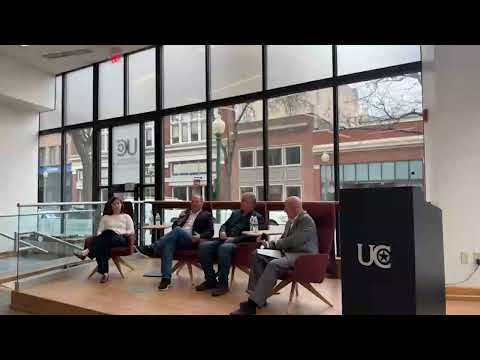
Filmmakers urge West Virginia small businesses to get 'film-ready' for shoots: housing, catering, movers and listings matter
Summary
Filmmakers at a University of Charleston panel urged small businesses to prepare for film production needs—housing, catering, rentals, security and flexible hours—and recommended signing up on the state's locations and crew directories at westvirginia.gov/wvfilm to be considered for work.
Local filmmakers and film-office staff told a University of Charleston panel that small businesses can capture new revenue from productions if they learn to work with production schedules and logistical needs. Panelists urged businesses to be pragmatic about availability and the temporary impacts of shoots and to sign up on the state's locations and crew listings so producers can find them.
"If every time you spend a dollar at one store, they gave you a dime back and the other place they didn't, you would go get the dime back every time," Bob said when asked about the local spending pattern productions create. Bob and Jeff described practical services productions need: hotels and housing for cast and crew, catering and food services, fuel and vehicle rentals, secure storage and movers, walkie-talkies and trailers for remote shoots, and cleaning services after wrap.
Morgan, a local banker present at the panel, encouraged businesses to manage expectations and understand production rhythms: long hours, last-minute scheduling and the need for reliable, insured vendors. "You get so much more done when you can manage expectations," Morgan said, advising local vendors to plan for long shoots and the special requests productions may require.
Megan Smith of the West Virginia Film Office said property owners and businesses should create listings at westvirginia.gov/wvfilm to be "pre-vetted" and searchable by location scouts and producers; the film office also connects producers to local convention-and-visitor bureaus and a point person, Dave Lavender, who helps coordinate shoots.
Panelists recommended networking, apprenticeships and hands-on experience as the quickest route into paid crew work, and suggested acting roles and local theater as entry points for aspiring performers. The panel closed with organizers directing attendees to the film-office landing page and QR-code demonstrations for upcoming events and trainings.