Get Full Government Meeting Transcripts, Videos, & Alerts Forever!
Get email alerts on the School Bond topic
No spam. Unsubscribe anytime.
Norris School District 160 outlines $34.8 million bond proposal ahead of May 12 vote
Summary
District officials described a $34.8 million bond package that would fund HVAC and roof work, security upgrades, high-school renovations, parking and athletic facilities; officials described financing options, tax impacts, $2.5M lease-purchase for fields and about $900,000 raised privately.
Norris School District 160 officials on Monday presented details of a $34.8 million bond proposal that would appear on the May 12 ballot, outlining projects they say are necessary to update aging building systems, improve campus safety and add instructional and athletic space.
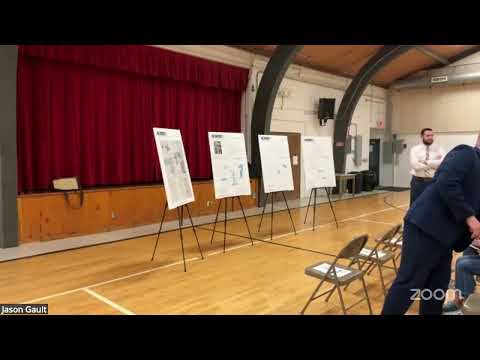
Superintendent McNulty said the package grew out of a community steering committee and a facilities audit and includes major HVAC replacements, roof repairs, a reconfigured and more secure high-school entrance, upgraded building controls and technology, parking and circulation changes, and renovations to career and technical education (CTE) spaces and locker rooms. “We are just going to use that handout as a guide,” McNulty told attendees as he walked through the district’s priorities and process.
Why it matters: The bond would allow the district to bundle multiple capital needs and schedule work over time rather than addressing them piecemeal, officials said. District leaders said packaging the projects together improves efficiency and gives contractors the budget certainty to complete larger renovations, rather than repairing roofs or HVAC systems in multiple separate years.
Scope and money: The $34.8 million figure reflects priorities identified in three community steering-committee meetings. Officials said the bond would fund new HVAC systems (excluding middle-school HVAC replaced in 2022 with a QZAB), additional roof work, upgraded visitor management and access controls, replacement of cameras and communications equipment, reworked CTE and high-school instructional space, new locker-room space and improvements to parking and bus circulation.
Athletics and private fundraising: The district confirmed it used a $2.5 million lease-purchase authorization to build four tennis courts and a baseball field; that amount was the district cap and the community raised roughly $900,000 more in private donations and grants for amenities such as wind screens, a scoreboard and restrooms. District officials said a USDA grant contributed about $150,000 to the athletic project. Officials framed the lease-purchase as a financing choice made so the district would not exhaust its special-building reserves for those amenities.
Financing and tax context: Officials said the district currently carries about $3 million in its special building fund and has taken steps in recent years to lower its combined levy. McNulty referenced historical levy figures, saying the combined levy in 2018 was about $1.15 and that the district’s reported levy in 2025 is 0.754; he warned that state property-tax credits that have reduced homeowner bills in recent years could expire. District leaders said the bond would be amortized over 20 years and that local valuation changes will affect annual tax rates, urging voters to weigh the long-term benefits against near-term tax effects.
Timeline and alternatives: If voters approve the bond, some site work and parking upgrades could begin as soon as this summer, with larger construction staged after design work the following year, presenters said. Officials added that if the bond fails the district will revisit priorities and budget alternatives and could complete work in smaller phases as money allows.
Public reaction and accountability: Residents at the meeting asked detailed questions about what would be funded by the bond versus what was paid through private fundraising, whether athletic projects crowded out core building repairs and how security upgrades would function day-to-day. One attendee said elected officials should be held accountable for sports spending; officials replied that the board sought community input and that the ballot gives voters the final choice.
No vote at the meeting: The session was informational; board members and staff answered questions but did not take formal action. Officials directed attendees to printed handouts and an online open-house presentation and announced additional community forums prior to the May 12 vote.
What’s next: Voters will decide the bond on May 12. The district said more detailed cost-breakdowns and breakout estimates are available on request and at upcoming meetings for residents who want itemized figures or to propose narrower packages.