Get Full Government Meeting Transcripts, Videos, & Alerts Forever!
Get email alerts on the Film Tax Credit topic
No spam. Unsubscribe anytime.
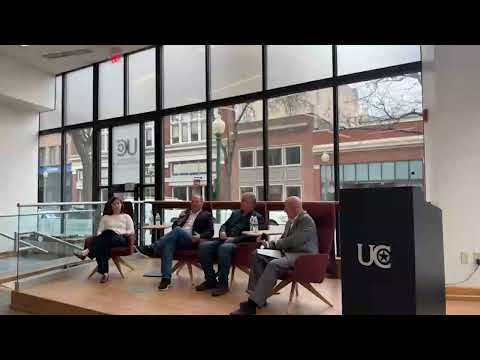
Uncapped West Virginia film tax credit credited with $30–40 million in local production spending, panelists say
Summary
At a University of Charleston panel, West Virginia Film Office staff and local filmmakers described the 2022 reinstated, uncapped film tax credit (27% base, +4% bonus for hiring at least 10 West Virginians), and estimated $30–$40 million in in-state production spending since 2022, with continued growth tied to workforce development and local cooperation.
Megan Smith of the West Virginia Film Office told a University of Charleston panel that the state's 2022 film tax incentive is now an "uncapped tax credit," designed to draw productions by returning a portion of in-state spending to productions that meet eligibility rules. Smith said the program offers a 27% base credit and a 4-percentage-point bonus for productions that hire at least 10 West Virginians, with a $50,000 minimum spend to qualify.
"If the state does not have a film tax credit, you just don't get considered," Smith said, arguing the incentive makes West Virginia competitive for shoots. Panelists credited the credit and coordinated state support with recent production activity: Smith estimated roughly $30 million spent in West Virginia since 2022, and fellow panelists said the figure could be higher when accounting for delayed projects tied to industry strikes.
"It's not a giveaway. You have to spend to get it," Jeff, a co-founder of Allegany Image Factory, said, describing the credit as a financial driver that makes productions viable in the state. He and co-founder Bob said individual projects can deliver sizable direct local spending; the co-founders estimated direct community spend in the low six figures on mid-size productions and described ripple effects (hotels, catering, equipment rentals) that benefit vendors and service businesses.
Panelists also emphasized that the credit is only one piece of the state's competitiveness. Jeff and Bob credited state agencies and local partners for logistical support—permitting, traffic control and assistance from state natural-resources staff—that makes shoots feasible. "When people look at a place and it's workable," Jeff said, "they come back." Megan Smith pointed event organizers and potential location owners to the film-office resources at westvirginia.gov/wvfilm, including a locations library and a cast-and-crew directory.
Panelists said the tax-credit program is actively creating jobs and training opportunities, but cautioned that building a stable local workforce will take time and repeated productions. They urged local governments and businesses to prepare for production needs—housing, 24-hour access when necessary, fueling and safety—so communities can convert occasional shoots into sustained employment.
The panel closed with organizers directing attendees to online resources and upcoming trainings; the film office's landing page and locations library are the first point of contact for producers or property owners considering a shoot in West Virginia.