Get Full Government Meeting Transcripts, Videos, & Alerts Forever!
Get email alerts on the Local Concerns topic
No spam. Unsubscribe anytime.
Corrales Village residents press lawmakers on water, oil-and-gas production and county property valuations
Summary
At a town hall in Corrales Village, residents raised concerns about groundwater protection and projected oil-and-gas production, complained about large property-valuation increases tied to county assessor practices, and pressed lawmakers on health-care workforce and malpractice reforms; legislators said they will follow up and pursue targeted measures.
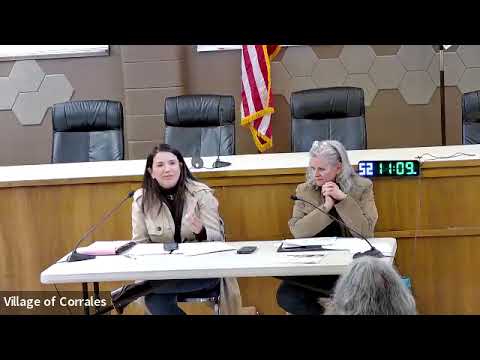
Residents at a Corrales Village town hall used the question period to press Sen. Cindy Nava and Rep. Kathleen Kates on local consequences of state policy: groundwater protection amid expanding oil-and-gas production, the county assessor's valuation method, and the shortage of local medical specialists.
Paul Stokes, a Corrales resident, asked what the state could do about projections showing sharply increased oil-and-gas production tied to severance-tax revenue estimates. He said the projection's implications for the climate and local water resources were alarming. "It seems immoral to produce that much oil and gas when water is our most valuable resource here," Stokes said.
Kates and Nava described steps taken during the session: higher leasing fees aimed at aligning state leases with regional market rates, incentives and rules to encourage reuse of produced water rather than potable water for industrial operations, and enforcement and penalty discussions for small operators who do not cap wells correctly. Both acknowledged that stopping production outright is legally and politically difficult when operations occur on private land.
Property valuations drew strong reaction. Ken Dehoff, who farms in Corrales, said Sandoval County's assessor divided the village into long strips and applied communitywide estimates that produced double-digit increases in assessed values for many lots. "The worst increase was in my strip where every acre will be taxed at exactly $290,000 — that's a 42% increase from last year," Dehoff said, and he presented three pages of documentation to the lawmakers. Kates said she has publicly criticized the assessor's approach, will gather the submitted evidence and bring the matter to the governor and county officials, but noted that legal and administrative remedies are limited and may take time.
On health care, Al Knight and other residents described long waits for specialty care, said malpractice-insurance and staffing dynamics push providers away, and asked what the Legislature accomplished. Both legislators described an omnibus approach they said is needed: loan-forgiveness expansion, housing subsidies and other incentives to recruit and retain providers, higher Medicaid reimbursement levels implemented in 2024 and continued work on compacts and licensure pathways for internationally trained health professionals. They also framed the malpractice challenge as intertwined with staffing and insurance-market structure rather than solely attributable to trial-lawyer litigation.
Other questions during the meeting included a request for clarity about a pocket veto of a "free-roaming horse" bill (HB 284), concerns about regulatory oversight of cannabis licensing, and a request for state help preserving local land-conservancy tax treatment and drought designations that affect farmers' eligibility for grants. Kates and Nava either pledged to follow up with documentation or said the proposals had not advanced (for example, a SLAPP-related bill did not leave committee).
Ending: Legislators committed to return with follow-up information, to share materials on SB 364 implementation and to coordinate with county officials on property-assessor evidence and next steps. Residents were encouraged to stay engaged and to provide additional documents to legislative staff.