Get Full Government Meeting Transcripts, Videos, & Alerts Forever!
Get email alerts on the Small Business Relief topic
No spam. Unsubscribe anytime.
Senate committee debates $100M small-business recovery plan for businesses hit by federal enforcement; concerns about scope and safeguards
Summary
Lawmakers heard hours of testimony on a proposed $100 million program of grants and forgivable loans for businesses affected by federal immigration enforcement; members questioned eligibility windows, fraud prevention, regional targets and the loan-forgiveness schedule before laying the bill over for possible inclusion.
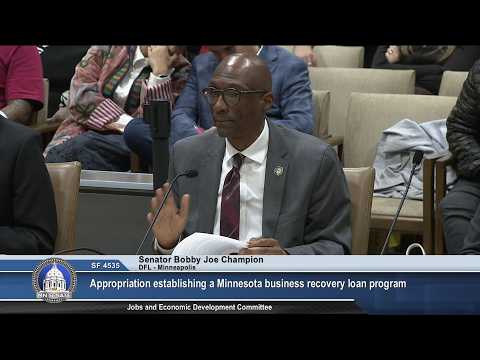
Senate File 45 (presented March 23) would create a Minnesota business recovery loan and grant program to help businesses the sponsor says were affected by increased federal immigration enforcement. The bill proposes a mix of rapid-response grants (up to $20,000 per eligible business) and no-interest forgivable loans (up to $250,000) administered with certified CDFI partners and other nonprofit intermediaries.
Sponsor testimony described eligibility as businesses with fewer than 50 employees, a permanent physical commercial location (with some inclusion for registered in‑home businesses), and documented revenue loss compared with a prior-year period. The bill's initial look-back windows referenced July 1, 2024–Feb. 28, 2025 and July 1, 2025–Feb. 28, 2026; the sponsor said those dates were chosen to capture a range of impacts beginning earlier than the December surge that drew widespread attention.
Committee members repeatedly pressed the sponsor and DEED representatives on fraud safeguards, double-dipping rules, whether grants should be determined by lottery versus competitive RFP, whether to set geographic targets and how the state would pay administrative costs. Senator Pratt and others warned that attestation alone is not a reliable fraud-prevention tool and urged stricter eligibility checks (Department of Revenue, Secretary of State registration, and stronger underwriting).
Multiple small-business owners and local leaders testified in support, offering anecdotal damage estimates (owners reported revenue drops of 30–50% in cited examples). City and nonprofit officials urged rapid deployment, culturally and linguistically targeted outreach, and partnership with local CDFIs that could both underwrite loans and provide technical assistance.
The bill author described a loan-participation model in which partner organizations underwrite and service loans while the commissioner purchases a participation interest to backstop risk; reporting requirements and quarterly remittance of repayments to a Minnesota Forward Fund account were included. Administrative fees (e.g., 5% to partner organizations; 2% for administration) were described in the draft.
During committee deliberations Senator Muhammad successfully moved to delete a separate Section 2 (a proposed statewide economic analysis) and reallocate $250,000 from that study to the program itself; the committee approved the change. After extended debate and an agreed plan to continue drafting and fiscal review, the committee laid the bill over for possible inclusion in omnibus actions.
Next step: the sponsor signaled continued negotiations on eligibility, fraud controls and regional allocation methods before finance and final consideration.