Get Full Government Meeting Transcripts, Videos, & Alerts Forever!
Get email alerts on the Tax Conformity Package topic
No spam. Unsubscribe anytime.
Business groups urge Minnesota to conform to new federal tax rules; members press fiscal trade-offs
Summary
Business trade groups and manufacturers testified in favor of a set of conformity bills (HF 38-14, 38-15, 38-17, HF 38-16) to align state law with recent federal tax changes. Supporters said conformity simplifies filing and boosts investment; some members raised concerns about long-term cost and who benefits.
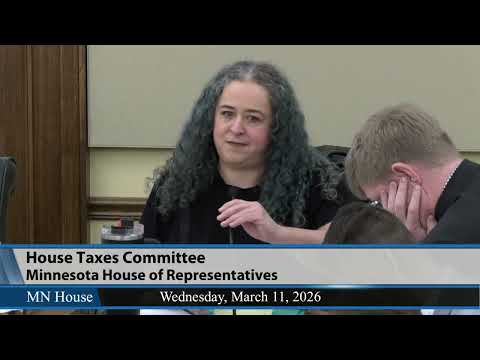
A package of bills to conform Minnesota tax law to recent federal changes drew broad support from business groups at a House Taxes Committee hearing, while some committee members pressed for more analysis of long-term fiscal costs and distributional effects.
Nonpartisan staff described HF 38-14 (Section 179 expensing), HF 38-15 (business interest deduction adjustments) and HF 38-17 (100% bonus depreciation) and noted that some provisions would be retroactive or effective for tax year 2025. Staff explained Section 179 would increase the maximum expensing threshold (the testimony cited an increase from roughly $1.25 million to $2.5 million and an increase in the phase-out threshold from about $3 million to $4 million).
Brian Cook of the Minnesota Chamber testified in favor, saying the chamber supports “doing as much mechanical conformity as possible to increase Minnesota's tax competitiveness,” and that provisions like Section 179 and bonus depreciation help small and medium-sized businesses invest and grow. John Besh of the National Federation of Independent Business told the committee immediate expensing improves cash flow and reduces compliance burdens for small firms.
Representative Witty and nonpartisan staff presented HF 38-16, which would restore immediate expensing for domestic research and experimental expenditures (a change away from the five-year amortization currently required by state law). Testimony from a Minnesota manufacturer (Alex Marcus of Day Stainless) emphasized that immediate expensing would free up working capital for expansion and hiring and help local firms compete with neighboring states that already conform.
Members questioned the fiscal effects and who ultimately benefits. Nonpartisan staff warned that some provisions show a positive fiscal impact in the FY2027–FY2029 forecast window (front-loaded by retroactivity) but can become costs later as timing differences reverse. Staff said the retroactivity in some provisions could require amended returns back to tax year 2022 for qualifying taxpayers.
Other committee members urged caution about the long-term price tag and whether conformity would primarily benefit large multistate or multinational firms rather than Minnesota-based small businesses. One member stressed the trade-offs between creating a competitive tax environment and preserving state revenue for programs, noting that some conformity items are “front-loaded” in the budget window but may net to a cost afterward.
The committee laid the conformity bills over for further consideration; testifiers were asked to remain available for follow-up questions.