Get Full Government Meeting Transcripts, Videos, & Alerts Forever!
Get email alerts on the Public Finance topic
No spam. Unsubscribe anytime.
Advisors outline LCDA conduit bonds; Cameron Parish jurors debate hiring special counsel for consolidation and tax strategy
Summary
Municipal advisors explained conduit bond issuance through the LCDA and modeling for debt and millage restructuring; jurors discussed options to consolidate small special districts, legal pathways (constitutional parishwide vote or Title 33 consensual route), and moved to add hiring outside counsel to a future voting agenda.
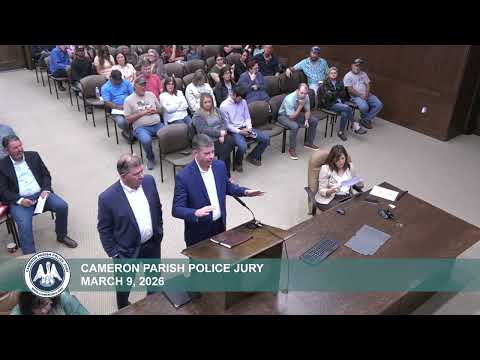
Municipal finance advisors briefed the Cameron Parish Police Jury on March 9 about conduit bond options and long‑range tax‑structure planning, and jurors discussed whether to hire special legal counsel to guide consolidation and ballot language.
Matt Cern (Jones Walker) and Sean Toots (municipal advisory) described the LCDA as a conduit issuer that can structure bonds secured by a pledge of lawfully available funds to help local bodies accelerate projects and pay debt service from anticipated future revenues. Cern and Toots said a $10 million illustrative issuance over 10 years could carry roughly a 1.25% annual debt service cost in the current market, with lower annual costs for longer maturities; they stressed that final rates depend on structure and market conditions.
Jurors asked whether advisors could help craft ballot language and tax structures. The advisors said their municipal advisory role includes fiscal structuring, modeling millage changes and advising on levy scenarios but not drafting legal ballot language; legal counsel is needed for statutory wording and compliance.
The group discussed two legal routes for consolidating special taxing districts: a parishwide constitutional process (a parishwide majority vote to consolidate categories of districts, then separate votes to equalize millages) and a Title 33 process beginning with district resolutions asking the police jury to consolidate. Jurors noted political hurdles: some small districts may be reluctant to join a consolidation that reduces local control; others said consolidations were pursued earlier to qualify for a $15 million state infrastructure grant for South Cameron.
Several jurors recommended hiring special counsel because of conflicts that prevent some local firms from serving and the complexity of consolidation paths, ballot wording and potential abolition of districts (a "nuclear" option that would terminate district taxes while requiring new tax authority if services continued). A motion was made to add authorization for the district attorney to hire outside counsel for tax, bonding and restructuring strategy to the next voting meeting; the jury postponed final action to the voting session and discussed appointing a three‑member committee to conduct preliminary, public strategy meetings with counsel.
Jurors emphasized they wanted a shortlist of firms and public meetings with selected counsel; recommendations discussed included a Butler Snow attorney (Carmen Lever) and other firms previously used by local bodies. No final hiring decision was made at the business meeting; jurors moved the proposal to a future voting agenda so members can review engagement letters and check conflicts.