Get Full Government Meeting Transcripts, Videos, & Alerts Forever!
Get email alerts on the National Service topic
No spam. Unsubscribe anytime.
Support for compulsory national service pitched as way to combat youth isolation
Summary
A recorded exchange explored a proposal for compulsory national service for young Americans, suggesting one-to-two-year programs in volunteering and mentoring aimed at reducing youth isolation and addressing what the speaker called a 'crisis of men and boys.' No formal proposal details or decisions were recorded.
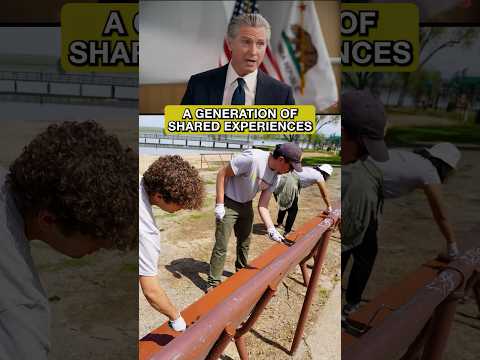
A recorded exchange opened with a question about whether a proposed compulsory national service would apply to both boys and girls and what forms of service it would include. The speaker responded by describing the core aim as rebuilding shared experiences among young people.
"I don't know anything that would be more powerful and potent than sharing experiences at scale for a generation that feels more isolated, more alone, more disconnected, more anxious," the speaker said, adding that she envisioned "one, two years of service that could come in many forms and manifestations across the spectrum." The speaker described examples including "volunteering at a senior center" and mentoring young people.
The speaker also framed part of the proposal as a targeted response to male youth, asserting, "we have a crisis of men and boys and we've been trying to address that as aggressively as any other state." She suggested mentoring young men as a specific application of broader service opportunities.
Context provided by the speaker linked the idea to historical patterns of shared sacrifice: "Shared experiences, we used to have them ... through struggle and conflict, war. It wasn't about Democrats, Republicans, urban, rural. It's about understanding who we are," she said, arguing that service could help rebuild cross-community ties.
The exchange did not include legislative language, funding sources, a sponsoring organization, or a vote; no formal action or timetable was recorded in the transcript. Details such as whether participation would be mandatory by law, how participants would be selected or funded, and which agencies would administer any program were not specified in the recorded remarks. The discussion remained at the level of policy rationale and possible service types rather than a concrete, implementable proposal.