Get Full Government Meeting Transcripts, Videos, & Alerts Forever!
Get email alerts on the Jail Budget topic
No spam. Unsubscribe anytime.
Cowlitz County reviews jail budget as revenues top projections; Medicaid billing join still under review
Summary
County commissioners heard that jail intergovernmental revenues exceeded budget by roughly $127,000—driven by meal reimbursements and federal grants—and discussed joining a Medicaid billing program to recover medical costs, but staff said reimbursements are slow and uncertain.
Cowlitz County commissioners spent the meeting reviewing the 2025 jail and corrections budgets and probing options to recoup medical and detention costs.
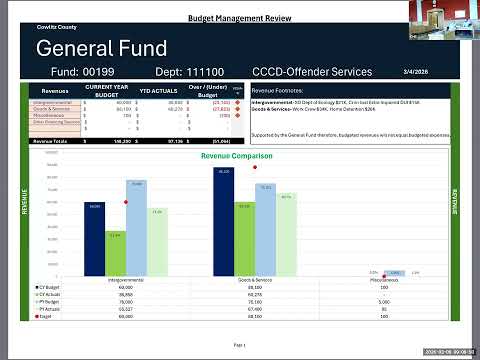
Commissioner Sean Rowey opened the budget review, and staff reported intergovernmental revenue ran about $127,000 over budget, citing higher reimbursements for juvenile detention meal programs and federal grants. Board members also heard that charges for detention provided to partner jurisdictions contributed materially: the county reported roughly $1,000,000 in charges for the City of Long View, about $360,000 for Kelso and about $211,000 from the Department of Corrections (DOC).
On treatment funding, the transcript shows the county receives a Health Care Authority grant that covers medically assisted treatment (primarily Suboxone), and staff said those funds help offset the jail medical contract and some medication costs. "This offsets the jail medical contract as well as some medication we pay for," one staff speaker said.
Staff said personnel and inmate-supply budgets were generally under plan, but certain service lines and utilities — notably a Long View utility bill cited at roughly $14,220 for January — pushed some service categories slightly over budget. The board also noted two current vacancies for corrections officers and discussed widespread recruiting challenges; one commissioner said local officer-per-thousand ratios trail national norms.
The county is also considering joining a Medicaid billing program to bill for medical services provided in the jail. "We are still on track to join the program midyear this year. We're in cohort three," the staff speaker said, but added that reimbursements reported by earlier cohorts have been "very slow and low" and that amounts are still unclear. Staff said the county will finish a cost-benefit analysis and meet with stakeholders before bringing a final recommendation to the board.
On inmate housing, staff said the county lifted a previous cap on accepting DOC detainees and is now averaging 12–14 DOC inmates a day at a current per-detainee daily rate of 10,904; staff stated the rate covers the daily costs and that DOC also pays for its inmates' medical care.
The board heard that commissary and phone contract commissions are reinvested into inmate supplies and programs, including work-crew tools and incentive items. Offender services revenue and goods-and-services categories were reported below budget last year, but staff expect work-crew revenue to increase as crews return to consistent operations.
What happens next: staff said they will continue the cost-benefit work on Medicaid billing, meet with additional jurisdictions and stakeholders, and return to the board with final recommendations and any contract language needed to proceed.