Get Full Government Meeting Transcripts, Videos, & Alerts Forever!
Get email alerts on the Summer Youth Engagement topic
No spam. Unsubscribe anytime.
Baltimore committee hears plan to shore up summer youth seats, balance outreach and enforcement
Summary
City agencies told the Public Safety Committee they are expanding outreach and late-night programming for Baltimore’s summer youth strategy but warned a loss of temporary federal funds has cut seats; the committee requested consolidated seat counts and district-level placement data.
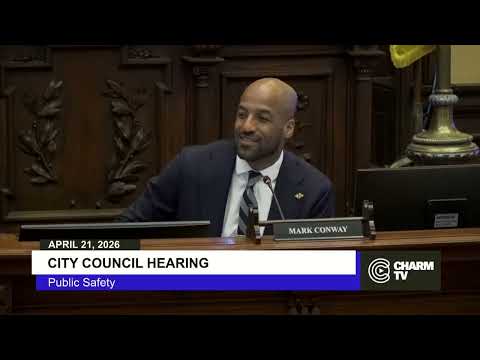
Chair Mark Conway opened a Public Safety Committee hearing on LO 26-0046 to review Baltimore’s 2026 Summer Youth Engagement Strategy and pressed city agencies and funders to explain how they will restore capacity and keep young people safe.
“Summer is a critical window for creating safe spaces, building skills, and connecting young people to real opportunities,” Conway said, framing the hearing around recent seat declines and gaps for older youth and immigrant communities. He said data the committee reviewed shows supply falling short of demand and called for sustained funding to stabilize programs.
Assistant Deputy Mayor Noelle West, who leads the administration’s youth strategy, described the effort as an interagency approach combining engagement, outreach and enforcement that has been expanded into a longer activation this year. “This initiative is more than a seasonal program,” West said, noting coordination among MONSE (Mayor’s Office of Neighborhood Safety and Engagement), the Baltimore Police Department, City Schools, Recreation and Parks, MOED and philanthropic partners.
MONSE Director Stefanie Mavronis told the committee the office scheduled 52 evening youth engagement days through Labor Day and is using data to target six core zones where young people gather. Mavronis said credible-messenger staff aim to build relationships, provide referrals and de-escalate conflicts before enforcement becomes necessary.
Major Arnold Jenkins of the Baltimore Police Department described training that emphasizes presence and de-escalation, and a tiered response that prioritizes diversion to youth connection centers and outreach before arrest. “We want to make sure we can openly communicate and get a good outcome without ever getting to enforcement,” Jenkins said, adding enforcement remains an option when public safety is at risk.
City Schools officials said the district’s summer offerings will open June 29 and run through July 30 for many programs. Dr. Lauren Raskin Stacy said the district’s summer budget is approximately $6 million this year, down from about $8 million last year, and said the district projects roughly 10,350 City Schools seats for summer 2026 (City Schools offered about 13,000 seats in 2025). Lorealyn Sutton said Extended School Year (ESY) special education services have been consolidated to 12 sites so eligible students can be served efficiently and co-located with traditional programs.
Baltimore Youth Fund Vice President Brennan Hansen outlined the Summer Possibilities Fund—$2 million in grants to 30 organizations, plus capacity-building supports and a pilot of multi-year awards intended to improve program stability. Hansen said BYSF-funded programs operate during peak-risk hours and that early disbursement of funds helped partners hire and train staff.
Committee members pressed for precise seat counts and geographic placement. Several council members asked agencies to provide a consolidated total of summer program seats across city agencies and funders, and to break down placements by council district. Agencies said some counts are still being finalized and agreed to provide updates: Baltimore’s Promise and other funding partners told the committee they expect to report program seat totals by the end of May.
Council members also focused on older youth (ages 19–24) and evening programming, noting those groups saw sharper declines in available options. Agencies said they are prioritizing full-day and late-night rec centers, targeted outreach, transportation supports, and partnerships with credible messengers and community-based organizations in hotspot neighborhoods. Doniece Brown of MOED described the Youth Opportunity Center for 18–24-year-olds and said it aims to serve about 800 young adults annually.
The committee discussed recurring open-air “link-ups” and teen gatherings promoted via social media. Agencies described strategies to prevent danger from those gatherings—advance outreach to organizers and influencers, targeted staffing of rangers and credible messengers, and asking residents to report early so authorities can intervene before crowds swell. Kendra Moore of Recreation and Parks noted large pool parties and midnight basketball among summer offerings designed to draw youth into supervised spaces.
The hearing record contains numeric and wording inconsistencies in places (for example, several different seat totals were cited by speakers and slides during the presentation). Where agencies could not resolve a figure on the spot, the committee requested updated and consolidated counts. The committee recessed after formally requesting: (1) an estimate of the total number of summer program seats citywide for 2026 and (2) a breakdown of program placements and seats by council district, plus a list of ESY sites and planned food-service locations.
The next procedural step is data delivery: the administration and funding partners agreed to supply the requested seat totals and district placement data so the council can assess gaps and allocate resources or policy responses if needed.