Get Full Government Meeting Transcripts, Videos, & Alerts Forever!
Get email alerts on the Unemployment Collections topic
No spam. Unsubscribe anytime.
UIA tells oversight panel it has resumed collections, reports $60 million recovered and 40,000 waiver requests
Summary
The Unemployment Insurance Agency told a House oversight subcommittee it has resumed collections after a court pause, recovered $60,000,000 in overpayments, processed about 30,000 waiver requests and waived roughly $46,000,000; the agency also previewed a July 17 change that will require claimants to record three weekly work-search activities.
The Unemployment Insurance Agency (UIA) told the Michigan House Oversight Subcommittee on State and Local Public Assistance Programs that it has resumed collecting pandemic-era overpayments and is balancing program-integrity goals with protections for claimants.
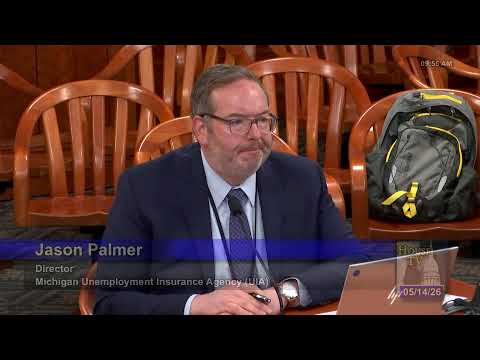
"We have collected $60,000,000 in overpayments," Director Palmer said in testimony to the panel, adding that the agency has received 40,000 waiver requests and processed about 30,000 of them. "We have waived $46,000,000 through state law, hardship waivers." He said staff are pausing collections when a waiver is filed and that the agency has expanded call-center hours and flexed about 20 staff to the collections team to handle demand.
Why it matters: The committee has held multiple oversight hearings about pandemic-era unemployment administration. Restored collections affect the trust fund that helps set employer tax rates, and the resumption has raised both taxpayer-protection and claimant-fairness questions for lawmakers.
Palmer told lawmakers the U.S. Department of Labor recently reviewed Michigan's Benefit Accuracy Measurement (BAM) audit process and found no findings, a result he said strengthens confidence in the agency's publicly posted performance metrics. "USDOL had no findings on our audit," he said, and the UIA published a public-facing dashboard and its 2025 annual report to make performance measures and recovery work available to the public.
The director outlined the claimant "journey" for overpayments: initial administrative determinations, internal protests, appeals to an administrative-law judge, and further appeals to the Unemployment Insurance Appeals Commission or courts. He emphasized multiple procedural protections and said collections are paused while waivers are pending. The agency described how more aggressive enforcement steps—such as garnishment and intercepts—typically arrive after multiple notices (the agency indicated 120 days is a usual benchmark for escalated notices).
Palmer also warned claimants about an upcoming eligibility change. "Starting on July 17, that number will be 3," he said, explaining that the requirement to record weekly work-search activities will rise from one to three starting July 17 and that the UIA is conducting outreach so claimants and partners are prepared.
On the level of fraud versus inadvertent overpayment, Palmer said that not everyone in collections is a criminal: collections include people who failed to verify income or to conduct required work searches as well as some who may have misreported earnings, and only some cases rise to prosecutable fraud. He described identity-verification measures and cross-matches—checking incarceration and death records and other databases—designed to catch bad claims at intake and to identify identity-theft victims so their claims can be administratively moved from exploited Social Security numbers and investigated.
Committee members pressed for more data. Director Palmer agreed to return with a breakdown of the processed waivers showing approval and denial rates for the roughly 30,000 waivers the agency has completed. Lawmakers also asked for clarification about the maximum repayment schedule; the UIA said the most a claimant would be required to pay on a voluntary repayment plan is $125 per month, though garnishments or intercepts can impose higher minimums.
Next steps: The director promised follow-up data on hardship-waiver approval rates and the committee discussed potential legislation to address interest and penalty rules for affected claimants.