Get Full Government Meeting Transcripts, Videos, & Alerts Forever!
Get email alerts on the Bridges topic
No spam. Unsubscribe anytime.
Chesapeake outlines bridge inventory, staffing and federally required inspections
Summary
City of Chesapeake officials described the city’s bridge inventory and maintenance program, listing three city-owned movable bridges, staffing levels and inspection schedules required under federal standards. Officials said updates are posted on the city’s bridges webpage and @ChesapeakeRoads.
The City of Chesapeake described its bridge inventory and maintenance program in a short informational segment, noting ownership divisions, staff responsibilities and federally required inspection schedules.
The city “is home to more than 100 bridges,” MAUER said, and the Virginia Department of Transportation owns the interstate spans while the city maintains 78 fixed bridges. MAUER said the city owns three movable bridges — the Gilmerton Bridge, Great Bridge Bridge and Centerville Turnpike Bridge — while the I-64 High Rise is owned by VDOT and the Deep Creek and North Landing bridges are under the U.S. Army Corps of Engineers.
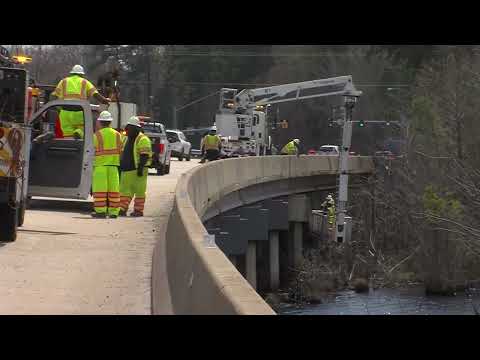
The description matters for public safety and traffic planning. Wilson said his team includes 36 City employees responsible for inspections, repairs and operations, providing the hands-on workforce that keeps bridges functional. “We have three engineers, two of them are professional engineers and one's an engineer in training,” Wilson said, and he listed 16 mechanics, three electricians, one welder and 17 bridge operators.
About 90% of the team's work, MAUER said, focuses on preventive maintenance such as cleaning, ensuring drainage, concrete repairs and routine lubrication; the team also responds to corrective maintenance after severe weather or accidents. MAUER added that bridge operators run the movable spans “in accordance with Coast Guard regulations.”
Bridge inspections are required by the Federal Highway Administration under the National Bridge Inspection Standards (NBIS), MAUER said. He described a lineup of inspection types: routine safety inspections of every component; annual fracture-critical inspections that require hands-on checks of structural elements on certain steel bridges; underwater inspections contracted every five years to commercial divers; and mechanical and electrical inspections for movable bridges performed by outside firms about once every six years, with the city conducting quarterly checks of mechanical systems.
The Bridges team maintains 24-hour on-call coverage, MAUER said, with staff and an electrician available to respond and coordinate with police to manage traffic when problems arise. Motorists can find the latest bridge updates on the @ChesapeakeRoads X (Twitter) account and at CityOfChesapeake.net/Bridges, he added.
No formal actions, votes or policy changes were announced in the segment; the presentation served to inform residents about the scale of the city’s maintenance effort, staffing and federally required inspection cycle.