Get Full Government Meeting Transcripts, Videos, & Alerts Forever!
Get email alerts on the Yearbook Controversy topic
No spam. Unsubscribe anytime.
Hundreds testify after PV High yearbook editorial sparks accusations of anti‑Semitism and calls for district action
Summary
More than three hours of public comment at the Palos Verdes Peninsula Unified School District board meeting centered on an editorial printed in the PV High yearbook. Jewish community members called the piece anti‑Semitic and urged a district rebuttal, teacher training and yearbook remediation; other speakers urged protection for the student author and balanced responses.
A school yearbook editorial about the Israel–Gaza war prompted more than three hours of testimony at the Palos Verdes Peninsula Unified School District board meeting on June 4, with dozens of community members urging sharply different remedies.
Jewish parents, rabbis and survivors’ descendants told the board the editorial contained “lies, historical inaccuracies and … anti‑Semitism” and asked the district to publish a rebuttal, recall or modify the yearbooks and require training for staff and students. “This essay … contains lies, historical inaccuracies and is a prime example of anti‑Semitism and propaganda,” said Alexandria Bloomer, during the first round of public commenters.
Speakers representing congregations, Holocaust survivors’ families and Jewish education organizations repeatedly urged the board to treat the episode as a district‑level failure of oversight. “The district must publish a statement condemning falsehoods that promote anti‑Semitism and incorporate vetted education on the topic into staff training and student curricula,” said one speaker, calling for a prompt agenda item to address the response.
Other residents and parents argued for protecting the student author and for careful distinctions between political speech and hate speech. “Publishing an opinion does not justify doxxing a minor or subjecting them to harassment,” said Yahya, identifying himself as a PV graduate. Several speakers described social media posts that circulated students’ names and photos and said that led to threatening messages and bullying.
Some commenters pressed the board on process questions: who approved the editorial page, what review and fact‑checking steps the adviser and administrators followed, and whether current policies governing school publications need revision. Legal concerns were raised about possible liability; an attorney in the audience noted that California civil‑liability rules may make a school liable for defamatory or hateful material distributed as a school publication if it gives the impression the school endorses the statements.
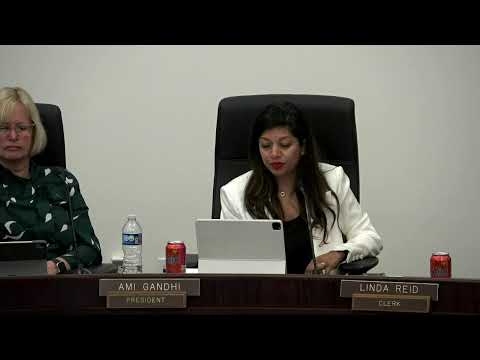
Board members and staff listened through the public comment period that included in‑person and Zoom speakers. Superintendent Dr Serrano (as referred to in public remarks) told the board she had met with students and families, organized listening sessions and was investigating the facts and the district’s policies on student journalism. “Our job includes ensuring safety for students and protecting student speech rights,” she told the board.
Members of the Muslim and Palestinian communities also addressed the board, asking for equal protections and warning that some district adults’ social‑media posts tied school officials to the editorial and placed staff and students at risk. “We must protect Muslim students and not allow retaliation or harassment,” one speaker said, adding that online posts linking a board member to the editorial had exposed children’s personal information.
Multiple speakers from both the Jewish and Muslim communities urged the board to move beyond rhetoric to concrete steps: publish a factual rebuttal or contextual statement, institute external anti‑bias training for staff, update editorial policy for student publications, and examine oversight processes so a similar incident cannot recur.
The board did not take immediate formal action on the yearbook during the meeting; trustees said they were reviewing the matter and would continue to consider responses that balanced student free‑speech protections with the district’s duty to prevent harassment and discrimination. Several community members asked that the board bring the topic back on a future agenda rather than handling it entirely in closed session.
The board’s discussion of the yearbook ran alongside separate agenda business, including a first reading of a proposed facilities bond and a public hearing on the annual LCAP and budget. The board closed the meeting after adopting resolutions honoring retirees and passing routine consent items.