Get Full Government Meeting Transcripts, Videos, & Alerts Forever!
Get email alerts on the Container Redemption topic
No spam. Unsubscribe anytime.
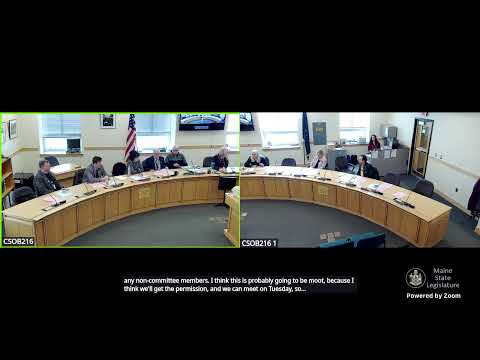
Committee votes 6–3 against minority amendment to co-mingling beverage container bill
Summary
The Environment and Natural Resources Committee voted 6–3 to report "ought not to pass" on LD 2036 after reconsideration of a minority‑report amendment by Rep. Campbell that restored statutory implementation dates and adjusted reporting and retroactivity. The department said it can implement the statute either way.
The Environment and Natural Resources Committee voted 6–3 to report "ought not to pass" on LD 2036, a bill addressing approval and operation of a co‑mingling program for beverage containers, after reconsidering a minority‑report amendment from the bill's sponsor, Representative Campbell.
The minority amendment marked up the text to revert several proposed timing changes and to adjust reporting and retroactivity. Analyst Daniel Tardicov summarized the changes as restoring the statutory October 1, 2026 deadline for sorting redemption‑center material by material type (not by brand) and keeping the January 15, 2026 plan implementation date in current law rather than moving implementation to June 2026. The amendment also removed a cross‑reference that would have required a separate study of refillable container infrastructure and adjusted retroactivity to apply only to plan changes as of January 1, 2026.
"We can implement it either way. We can implement the statute either way," Carla Hopkins, director of the Division of Materials Management at the Department of Environmental Protection, told the committee when asked whether statute changes would limit the department's ability to update the cooperative's plan. Hopkins said the department has been working with the co‑mingling cooperative on a living plan and would implement statutory changes as required.
Sponsor Representative Campbell said the department's concerns about the original language were addressed by the amendment. "I would say yes," Campbell said when asked whether the changes satisfied earlier departmental concerns.
Committee members also questioned retroactive dates and whether the amendment essentially codified terms under negotiation among the department and industry representatives. An unnamed committee member said they remained "somewhat concerned" that language originally drafted by industry could "handcuff" the department; Hopkins declined to attribute industry positions, saying those questions were better answered by industry representatives.
The committee first voted unanimously to reconsider the bill to allow the sponsor to explain the changes. After discussion and comment from the director and the analyst, Senator Brener moved the final motion that LD 2036 be reported "ought not to pass," seconded by Representative Lori Oer. The roll call yielded six votes in favor and three opposed; the motion carried.
Votes recorded in the transcript were read aloud by the clerk and included multiple committee members (tallied 6 in favor, 3 opposed). The committee did not finalize fiscal information for LD 2036 during the language review; the analyst noted fiscal review would follow as appropriate if the bill were acted on.
The committee also noted a potential technical overlap between section 12 of this amendment and a provision in LD 2141; if both became law, staff flagged a statutory duplication that would need later resolution but said it would not affect department administration immediately.
The committee adjourned after completing this and other language reviews and discussed the possibility of meeting next week to finish three outstanding bills that still lacked final language or fiscal notes.