Get Full Government Meeting Transcripts, Videos, & Alerts Forever!
Get email alerts on the Tree Growth Review topic
No spam. Unsubscribe anytime.
Tax panel debates tree-growth review and modest increase to property-tax fairness credit
Summary
The Taxation Committee discussed a committee bill that would authorize additional task-force meetings, raise the property-tax fairness credit from $1,000 to $1,500 for filers under 65, and direct a review of the Tree Growth current-use program; stakeholders differed on whether to convene a new working group or repeat a targeted audit.
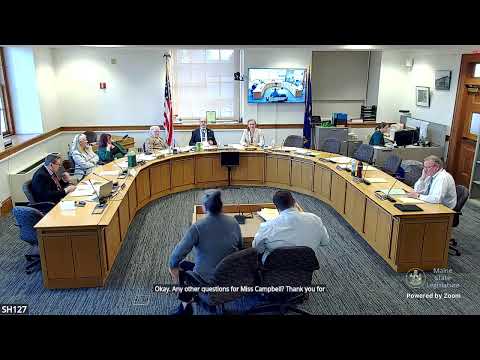
After two public hearings, the committee held a work session on its committee bill related to property tax relief and the Real Estate Property Tax Relief Task Force.
The draft committee bill contains three main pieces: authorize the task force to meet eight times in 2026; increase the property tax fairness credit from $1,000 to $1,500 for taxpayers under 65; and direct a working group to evaluate the Tree Growth current-use program, including whether prior audit recommendations were implemented.
Stakeholder inputs diverged. The Maine Forest Products Council and Maine Forest Service suggested repeating or tailoring the 2014 audit so results are comparable and to focus on specific questions (does a landowner’s management plan meet program requirements, is the plan followed, and has enrolled land been harvested as planned). By contrast, the Department of Agriculture, Conservation and Forestry (DACF) recommended against a new working group, arguing past studies and statutory constraints limit benefits and that the October 1 reporting deadline as drafted is unrealistic.
Assessors and other local officials flagged practical enforcement questions: assessors may request forest-management plans from landowners for review, but in practice assessors report difficulty obtaining and retaining consistent, directly comparable documentation for small coastal parcels. Forest Service staff suggested a phased approach—(1) a survey of assessors to enumerate recurring problems, (2) a targeted audit informed by the survey, and (3) if warranted, a tax-policy review by Maine Revenue Services.
On the property tax fairness credit, staff noted the increase would have an identifiable fiscal cost and that MRS confirmed the draft language functions as written; the committee asked the fiscal office to prepare a formal fiscal note. Members expressed interest in decoupling sections if necessary to allow the task force to meet without coupling an immediate appropriation or credit change to the same bill.
Next steps: The committee requested prior audit materials and assessor testimony for the next meeting, asked agencies for realistic deadlines and administrative-cost estimates, and signaled they would consider a phased survey/audit approach before deciding on statutory changes.