Get Full Government Meeting Transcripts, Videos, & Alerts Forever!
Get email alerts on the Tax Fraud Victims Exclusion topic
No spam. Unsubscribe anytime.
Maine lawmakers hear emotional testimony on bill to stop taxing money stolen in scams
Summary
Legislators and victims told the Taxation Committee that LD714 would align Maine with recent IRS guidance by exempting unrecoverable scam losses from state taxable income; agency witnesses warned the change depends on narrow federal qualifications and could raise technical and retroactivity issues.
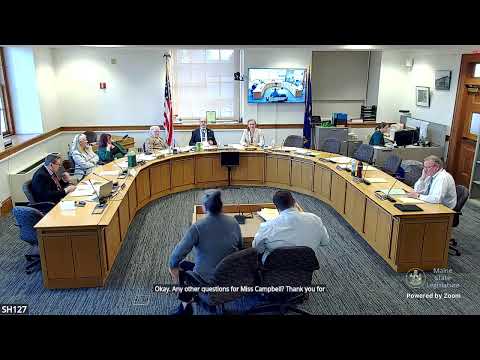
Representative Dan S. opened the public hearing on LD714, "an act to prevent state income tax from being collected on money stolen from victims of scams," and asked the committee to consider making the change effective earlier than the bill’s current start date.
The bill’s sponsor said the measure would allow Maine taxpayers to take the same kinds of reductions for theft losses that the Internal Revenue Code permits federally, citing IRC section 165 and data showing steep increases in fraud losses nationwide. "According to the FBI's Internet Crime Complaint Center, in 2024 there was nearly $5 billion in losses from nearly 150,000 Americans," the sponsor said, noting that Maine victims reported nearly $13 million in losses.
Why it matters: Victims told the committee that the state’s tax code can compound the financial harm of fraud. Phil Neto, a Maine resident who testified in person, described losing $960,000 to a "pig butchering" investment scam and said the emotional and financial damage made paying state tax on stolen funds impossible. "I will incur a tax bill for the state of Maine in excess of $80,000," Neto said, urging the committee to act so victims are not taxed on money they never actually received.
Maine Revenue Services (MRS) and administration witnesses said the bill as drafted ties state relief to whether a taxpayer qualifies for a federal deduction under IRC section 165. Dan Pitman, associate tax policy counsel at the Department of Administrative and Financial Services, explained that the Tax Cuts and Jobs Act narrowed casualty and theft-loss deductions and that recent IRS guidance is limited. "Not all victims of scams would qualify for the deduction," Pitman said, noting romance scams and personal-coercion schemes often do not meet the federal criteria the draft relies on.
Committee members pressed for technical detail. Several members asked whether the bill targets only individuals and whether Maine would require a federal determination before allowing a state subtraction; the sponsor repeatedly said the intent is to follow the federal qualification standard. Lawmakers also asked how MRS would administer retroactive claims and what the fiscal impact might be; MRS officials said estimates and administrative-cost figures remained under review.
Several victims recounted how scammers built trust, routed funds through multiple cryptocurrency wallets and platforms, and required additional "tax" or fees that prevented legitimate withdrawals. Reverend Larry Cook testified remotely that he and his wife lost $1.4 million and that while the IRS later abated federal taxes after appeal, Maine had not refunded state withholdings of about $43,000.
Next steps: The committee closed the public hearing and scheduled a work session later in the week to consider amendments, technical fixes, effective dates and any retroactivity. Agency witnesses said they will provide more detailed fiscal and administrative analysis at the work session.